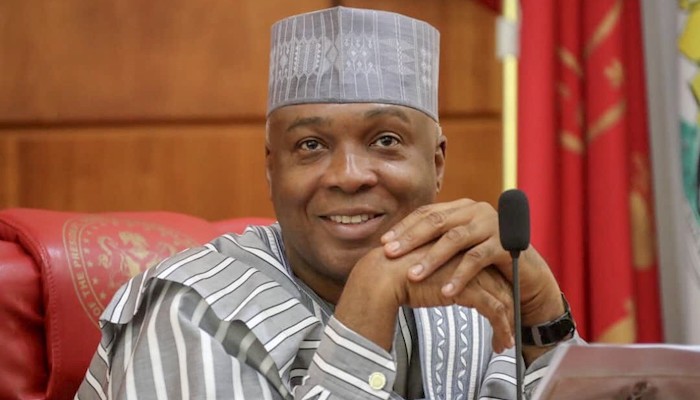
Kwara House of Assembly Aspirant under the platform of the State House of Assembly under the auspices of the Peoples’ Democratic Party (PDP), Hon. Mohammed Haruna Ìléríka Maigidansa has termed the resuscitation of Offa Robbery case against the Senate President of the 8th National Assembly, Dr. Abubakar Bukola Saraki as a political distraction.
The renewed attempt to link the Offa Robbery saga to Senator Saraki is one such development that has stirred conversations across the state, raising more questions about intent than substance.
According to him, “in the ever-evolving landscape of Kwara State politics, narratives often resurface not purely in the interest of justice, but as instruments shaped by timing and political convenience.
“The Offa Robbery incident, a tragic and deeply painful chapter in Kwara’s history, deserves solemn reflection and a sincere commitment to justice.
The reintroduction of allegations in a manner that appears selective and politically charged has led many observers to interpret it as something beyond a legal pursuit. Instead, it is increasingly being viewed as part of a broader political strategy.
Within this context, fingers are being pointed at the administration of AbdulRahman AbdulRazaq, with critics suggesting that the renewed focus on the case may serve as a distraction from present governance realities.
“With the 2027 political horizon gradually coming into view, such narratives risk being seen as calculated efforts to shape public perception and influence the electorate.
For supporters and political analysts alike, the move also raises concerns about the continued attempt to draw the name of Senator Saraki into controversies long after he has held executive office in the state. As a former Senate President and two-term Governor, Saraki’s political journey has remained a defining feature of Kwara’s modern history.
“Efforts to revisit past allegations, particularly those that have been publicly contested is an attempts to diminish Senator Saraki’s enduring influence.
“Beyond the politics lies a larger conversation about legacy. Senator Saraki is widely regarded by his loyalists as the architect of the “New Kwara,” credited with reforms and developmental strides that reshaped governance during his eight-year tenure as governor.
“From infrastructure to institutional strengthening, his administration left footprints that continue to shape political discourse in the state.
“This enduring legacy may explain why his name still commands attention in Kwara’s political space. Yet, it also underscores the delicate balance between accountability and political weaponization, especially when past events are revisited in ways that appear disconnected from due process and more aligned with contemporary political interests.
“As Kwarans navigate these narratives, there is a growing call for restraint, responsibility, and focus. The people, many argue, deserve governance anchored on present realities—economic development, social welfare, and inclusive growth—rather than a recycling of controversies that may deepen divisions.
Ultimately, the Offa Robbery case remains a solemn matter that should be handled with the utmost integrity and devoid of political undertones. Anything short of that risks undermining public trust—not only in the justice system but also in the sincerity of leadership.
