Sulaiman Abibulahi Tadese
Ahead of the 2027 general elections, the elite have started galvanizing, and alliances are being forged among parties and political gladiators to weed out the incumbent All Progressives Congress (APC) from power, especially at the national level. The new coalition under the umbrella of the African Democratic Congress (ADC) and the recent Ibadan Opposition Party leaders Summit symbolize the flag-off, serving not just as a convergence of interests but as a strategic recalibration of political forces positioning themselves for another cycle of contestation. Beneath the surface, consultations, alignments, and quiet negotiations continue to shape what is gradually emerging as a familiar political script dressed in new rhetoric.
Amidst this is the extant sentiment of frustrated average Nigerians, with a growing perception that any alternative to Tinubu’s APC and its ideology is a better option. In every quarter, there is constant clamoring in strident voices to alter the regime. This exponential demand for change goes beyond the seasonal ritual and augury that often characterize pre-election periods, where emotions are heightened and promises inflated. This time, the agitation is more visceral, more urgent, and deeply rooted in lived realities. It is driven by the necessity to be liberated from both political and socio-economic quagmires that have tightened their grip on the daily existence of the citizenry.
In a breakdown, the yearning for change is flagrantly justified. Economic policy is asphyxiating. The removal of the fuel subsidy, twinned with forex policy without substantial plans to cushion the deleterious effects, has been baneful. This has led to inflation spiraling to unprecedented levels, eroding purchasing power and deepening poverty across urban and rural households. Basic commodities have become luxuries, transportation costs have surged beyond reach, and small businesses are collapsing under unbearable operational costs. It was initially described as “temporary pain” and “bitter medicine” for national survival; however, it has since become like driftwood without a clear destination: floating, directionless, and increasingly burdensome on those forced to endure it.
Insecurity! Nothing has changed—protection of lives and property, the primary assignment of any government, has become a paradox; the social contract is broken. While insurgencies thrive, kidnapping and banditry have become normalized. From Borno, Kaduna, Plateau, and Niger to Kwara, blood is being shed, abductions occur with alarming regularity, and citizens are victimized for ransom. Farmers abandon their lands, highways become theatres of fear, and entire communities live under the shadow of violence. What should be exceptions have become patterns, and what should provoke outrage now meets weary resignation.
The nation is overwhelmed with miscellaneous challenges and shortfalls that reveal a jarring disconnection between electoral promises and present realities. Citizens were promised protection, stable electricity, improved infrastructure, industrial growth, job creation, youth empowerment, educational reform, accessible healthcare, technological advancement, and a diversified economy that would reduce dependence on oil. They were told of a future where power supply would be steady enough to drive production, where roads would facilitate commerce rather than frustrate it, where graduates would find meaningful employment, and where entrepreneurship would be supported rather than stifled. Promises were also made of currency stability, reduced cost of living, agricultural revolution, social welfare schemes, and inclusive governance that would leave no region behind. Yet, these remain largely aspirational; echoes of campaign rhetoric rather than tangible realities, while the current dispensation leaves much to be desired.
However, today’s woes should not make us vulnerable to amnesia on account of emotion, nor should our sense of reasoning be clouded. A Yoruba proverb says, “Orí bíbé kó l’ògùn orí fífó”—beheading is not a cure for a headache. Like predators seeking another opportunity to prey, those now wearing messianic garbs are not just “old wine”; they are principal actors in our troubled history. Some were architects of past policies that contributed to present predicaments; others were silent beneficiaries of systems they now claim to oppose. While longing for emancipation, we must not mistake a snare for asylum or inducement for salvation.
The crop of political actors donning the toga of saviors are former officeholders at both central and sub-national levels: erstwhile vice presidents, governors, presiding officers, and legislators. The list continues. They cannot afford to remain outside the orbit of power and are making concerted efforts to return, often repackaging themselves with new slogans and reinvented personas. Their promises should not merely be seen as fake but as calculated gimmicks—we are the prey, and they seek to feast again, cloaking ambition in the language of rescue and redemption.
Our chequered history has been one of moving “from frying pan to fire.” It is a cycle that makes us look back at every yesterday with nostalgia, no matter how flawed it once seemed. Our reality mirrors George Orwell’s “Animal Farm”: every liberation from Nigeria’s Mr. Jones is followed by Napoleonic enslavement; the cycle perpetuates with painful consistency. The old Napoleons are converging once more, a convergence devoid of genuine transformation—merely a recycling of failures and familiar disappointments. The “comrades” must not be deceived; these efforts serve the interests of the Napoleons and the few hungry “pigs,” not the collective good.
There is no serious third force; none with the courage, structure, and ideological clarity to challenge the status quo meaningfully. The Nigerian elite, like those in other democracies, are strategic and adaptive. The same individuals are reshuffling; no new faces emerge with sufficient independence from entrenched interests. PDP, APC, ADC—different platforms, same clique, same syndicate entrenched in our national misery. The system remains static, resistant to genuine disruption. Elite theorists argue that there is little to no change in the composition or structure of the ruling class. Political transitions rarely alter its fundamental makeup; what appears as change is often just a reorganization of entrenched interests, a reshuffling of positions without a redistribution of power.
The so-called united opposition is not an ideological alternative but a reconfiguration of familiar actors. The same hands that once steered the national ship into turbulent waters now present themselves as seasoned sailors capable of navigating it to safety. It is not a contest of vision but of access. Who gets to sit at the table of power, who controls the levers of state resources, not who genuinely seeks to establish a new order rooted in accountability and progress.
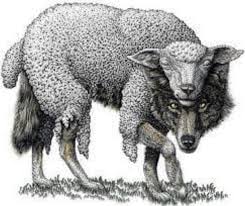
The wolves are gathering again for the hunt. They do not disappear; they merely change positions, adapting to new political climates while retaining old instincts. The masses have limited options. Like proverbial sheep, they are offered choices that differ in appearance but are fundamentally identical in substance. Every election becomes a ritual of replacement without renewal, transition without transformation. 2027 is only months away, when Nigerians may again succumb but not decide, surrender but not choose—caught in a recurring dilemma, standing at the crossroads yet circling the same path, perpetually choosing between ever-present oppressors.
The snag is no longer about dissatisfaction with the present, but about the danger embedded in the alternatives. Like Odysseus in the Odyssey. Nigerians are now compelled to choose between two forces of peril.
Odyssey is an ancient account where Odysseus is forced to sail through a narrow strait guarded by two horrors: Scylla on one side and Charybdis on the other. Scylla is a many-headed monster that snatches sailors from the ship one by one, while Charybdis is a monstrous whirlpool capable of swallowing the entire vessel whole. There is no safe passage between them. To avoid one is to drift dangerously toward the other; to escape both is impossible.
This is not even a matter of caveat emptor. Nigerians are indeed cooked, confused, and in dilemma. Aren’t we?
