The Federal Government has called for the integration of religious literacy into Nigeria’s education and civic systems as a strategy to curb political manipulation and prevent violence ahead of the 2027 general elections.
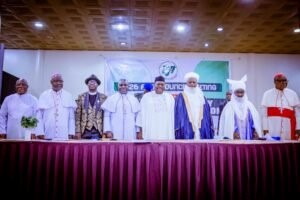
The Secretary to the Government of the Federation, George Akume, made the call on Wednesday in Abuja at the First Tri-annual Meeting of the Nigeria Inter-Religious Council, themed “Religious Literacy for National Cohesion.”
Akume described religious literacy as a civic necessity, warning that the weaponisation of identity and persistent stereotypes continue to fuel conflict across the country.
According to him, strengthening citizens’ understanding of religious differences would reduce susceptibility to manipulation, particularly during election cycles.
“National cohesion cannot be built on suspicion, coercion, or exclusion; it must rest on justice, dignity, and mutual respect,” he said.
He clarified that the government does not intend to politicise religion but rather to strengthen citizenship through informed engagement.
Although religious studies already exist in school curricula, Akume stressed the need to improve teacher capacity and learning materials to make them more effective.
With the 2027 elections approaching, he urged NIREC to intensify grassroots mobilisation while cautioning against attempts to exploit religious sentiments for political gain.
He also assured that the government had put measures in place to support religious and traditional institutions in maintaining peace before, during, and after the elections.
In his remarks, the President of the Christian Association of Nigeria, Daniel Okoh, described religious literacy as essential for dismantling stereotypes and countering divisive narratives.
“Across the country, tensions are often framed along religious lines, even when their root causes are social, economic, or political,” Okoh said.
Similarly, the Sultan of Sokoto, Sa’ad Abubakar III, urged Nigerians to stop linking criminality to religion.
He stressed that terrorists and bandits should be seen as criminals, regardless of any religious claims.
The Sultan also dismissed fears of religious domination, emphasising the need for peaceful coexistence based on mutual respect and understanding.
Meanwhile, a lecturer at the University of Abuja, Ukertor Moti, warned that poor understanding of religious teachings among some clerics continues to inflame tensions.
“Leadership without learning is dangerous,” he said, noting that selective interpretations of sacred texts often deepen divisions.
Moti therefore recommended the establishment of a national framework for religious literacy and responsible clergy practice, including a voluntary certification system to curb hate speech.
Earlier, the Executive Secretary of NIREC, Cornelius Omonokhua, stressed that true literacy should free the mind from inherited biases and promote critical thinking.
