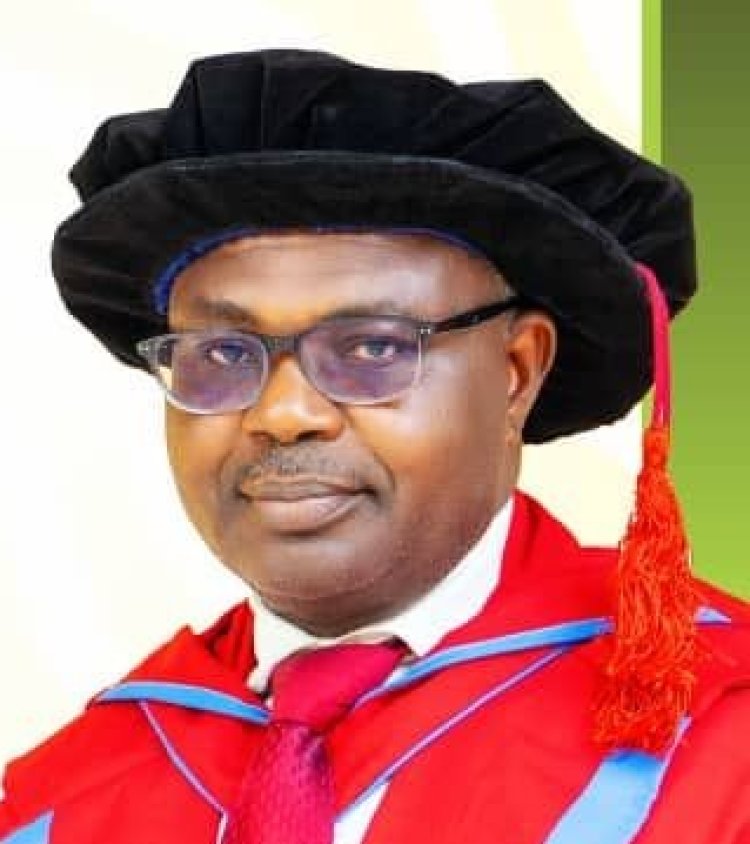
A political scientist, Prof. Sylvester Akhaine, has urged Nigerians to make better use of constitutional provisions to hold elected public officials accountable for their actions.
Akhaine, a lecturer in the Department of Political Science at Lagos State University (LASU), gave the advice in an interview with the News Agency of Nigeria (NAN) on Saturday in Lagos.
He argued that Nigeria’s challenge lies not in the absence of laws but in the failure to enforce them.
According to him, the 1999 Constitution already provides effective mechanisms to check abuse of office through impeachment, recall and periodic elections.
“The Constitution remains the supreme law of the land,” he said. “It clearly outlines how public officials are elected, how they should conduct themselves and the consequences of violating the public trust.”
Akhaine explained that the Constitution empowers lawmakers to impeach elected officials who abuse their offices.
It also gives citizens the right to vote out underperforming leaders during elections and recall elected representatives who fail to meet the expectations of their constituents.
However, he lamented that influential politicians often frustrate attempts to activate the constitutional recall process.
The political scientist cited previous recall efforts against former lawmakers Ibrahim Mantu and Dino Melaye, noting that neither exercise succeeded.
According to him, the problem stems from weak implementation rather than inadequate legal provisions.
Akhaine also criticised legislative institutions for failing, in some instances, to perform their constitutional responsibility of checking the executive arm of government.
Nevertheless, he acknowledged that Nigeria’s legislature has demonstrated independence at critical moments.
He cited the National Assembly’s rejection of the proposed third-term agenda during the administration of former President Olusegun Obasanjo under the leadership of Ken Nnamani.
According to him, that episode proved that democratic institutions can function effectively when leaders place national interest above personal or political considerations.
Akhaine also urged opposition political parties to become more organised and present credible alternatives capable of strengthening Nigeria’s democracy.
He observed that many opposition parties had struggled to sustain alliances and programmes needed to effectively challenge the ruling party.
Furthermore, he described active citizen participation as one of the strongest pillars of democratic accountability.
He expressed concern that many eligible Nigerians either fail to register to vote or stay away from the polls after registration.
“What we need is sustained political education so that citizens understand the power of their votes,” he said.
“The ballot remains the strongest instrument for choosing leaders and replacing those who fail to perform. Nigerians must rise to their civic responsibility and actively participate in the democratic process.”
Akhaine expressed confidence that Nigeria’s democratic institutions would continue to grow stronger through greater accountability, responsible leadership and active citizen participation.
