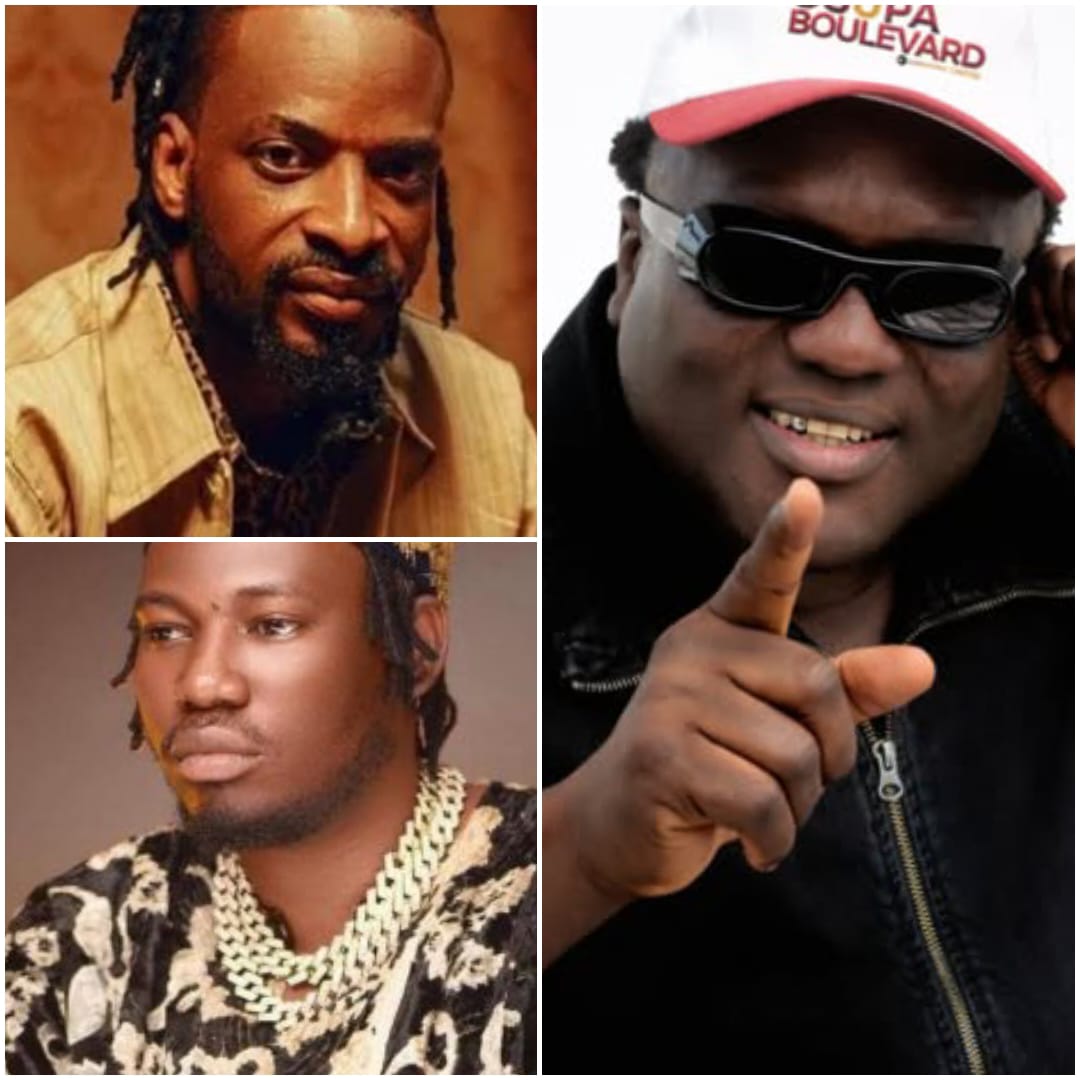
For decades, religion has remained one of Nigeria’s most sensitive subjects, with Christianity and Islam shaping the country’s spiritual identity. Today, however, a growing number of entertainers are openly embracing African Traditional Religion (ATR), igniting fresh conversations about culture, identity and indigenous spirituality.
Leading the discussion are musicians who have publicly declared their affiliation with Ifa and Isese traditions, challenging long-held perceptions about African spiritual practices.
Saheed Osupa Sparks Fresh Controversy
The debate gained fresh momentum after Fuji legend Saheed Osupa reportedly admitted that he uses traditional spiritual means, commonly referred to as juju, for success and personal well-being.
His comments generated criticism from some Islamic clerics and reignited public discussions about the place of traditional spiritual practices in modern Nigerian society.
9ice Opens Up About His Ifa Journey
Veteran singer Abolore Akande, better known as 9ice, has become one of the most outspoken figures in the movement.
The Gongo Aso crooner recently released a 13-track album inspired by his spiritual journey, using the project to reflect his connection to Ifa philosophy and African traditional beliefs.
Speaking during the album’s listening session, 9ice revealed that he had practised as a Babalawo for more than 18 years but chose to keep it private because he feared public backlash.
“I’ve been a Babalawo now for more than 18 years, but I hid it because some people would run from me if they knew,” he said.
He explained that the annual Odun Ifa celebration serves as a period of gratitude to God while seeking divine guidance for the future.
According to the singer, he decided to make his beliefs public because he wanted people to understand the spiritual path he follows.
His remarks, particularly those comparing African spirituality with other religious traditions, quickly generated debate across social media. While some praised his openness, others questioned his views, triggering broader conversations about religion and cultural heritage.
Qdot Explains His Shift to Isese
Indigenous music star Qdot has also publicly embraced Isese after years of identifying with Islam.
Known for celebrating Yoruba language and culture in his music, the singer said his spiritual beliefs now align with African traditional religion.
“I had since left Islam. How would some Islamic radicals be killing innocent souls and no single Islamic leader is condemning it? That means they are happy,” Qdot said.
His declaration attracted widespread attention because he previously incorporated Islamic themes, including Quranic recitations, into several of his songs.
Jah Bless Promotes Indigenous Beliefs
United States-based Nigerian singer Jah Bless has equally used his social media platforms to advocate African spirituality.
The artiste argues that African traditional beliefs predate Christianity and Islam on the continent. He maintains that embracing indigenous spirituality is not a rejection of God but an effort to reconnect with Africa’s ancestral heritage.
His position mirrors the views of many Isese advocates, who insist the movement seeks to preserve indigenous traditions rather than oppose other religions.
Boy Alinko Joins the Conversation
The debate has spread beyond the music industry.
Actor Bayo Bankole, popularly known as Boy Alinko, welcomed the growing public discussion on African Traditional Religion in a Facebook post.
“Opening a discussion on ATR is a good move; 9ice and Qdot have given it the momentum and awareness it needed. Many have already joined, but are too ashamed to celebrate it,” he wrote.
A Wider Cultural Conversation
The increasing visibility of Isese among entertainers reflects a broader conversation taking place across Africa and within the African diaspora.
Supporters view the movement as a return to indigenous identity and cultural heritage. Critics, however, argue that Christianity and Islam remain central to Nigeria’s religious and national identity.
For many observers, the entertainment industry has once again become a platform where artists explore personal convictions, cultural identity and social issues. As more public figures speak openly about African spirituality, the conversation continues to evolve, extending beyond religion into questions of history, identity and cultural preservation.
