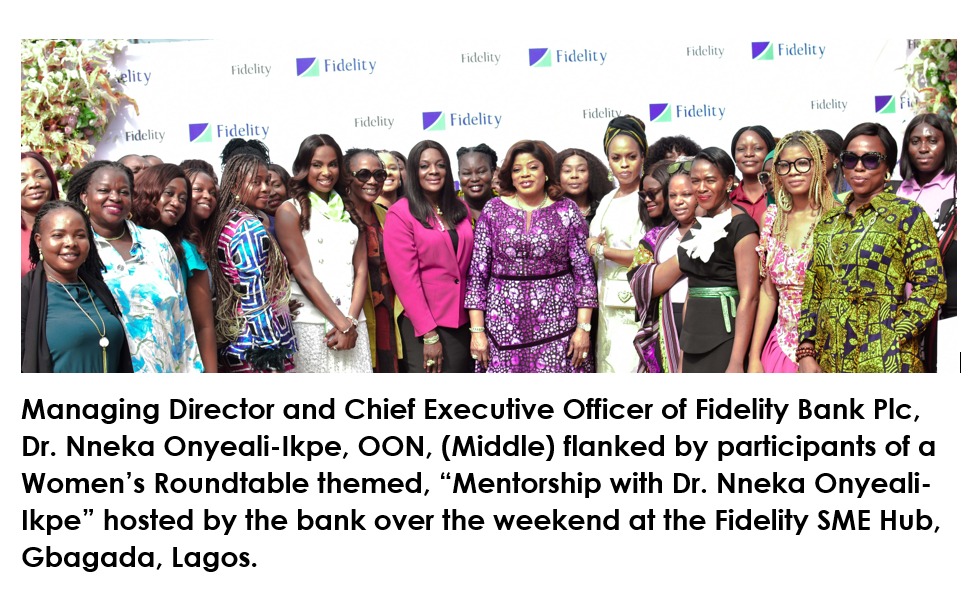
LAGOS, Nigeria — June 22, 2025. At a recent roundtable event in Lagos, Fidelity Bank’s Managing Director, Dr. Nneka Onyeali-Ikpe, emphasized that structural gaps—not a lack of ambition or talent—continue to hinder women’s professional growth in Nigeria. The discussion placed focus on the systemic challenges women face in accessing capital, skill development, and professional networks.
While the event was framed as a mentorship and networking opportunity, the underlying message spotlighted persistent institutional obstacles impeding women’s advancement in the workforce. Through the HerFidelity initiative, Fidelity Bank is positioning itself not merely as a supporter of women-led businesses, but as a respondent to long-standing gendered disparities in access and opportunity.
Speaking at the Women’s Roundtable hosted at the Fidelity SME Hub in Gbagada, Lagos, Dr. Onyeali-Ikpe addressed a room filled with women professionals from diverse sectors. She underscored the importance of continuous education, strategic collaboration, and personal resilience. However, her remarks also drew attention to broader systemic deficits limiting women’s career progress.
“In my engagements with women across different industries, I’ve seen first-hand that while talent and ambition abound, many still lack access to capital, skills development, health support, and networks,” she stated.
These deficits, she explained, are what led to the creation of HerFidelity—a program designed to support women beyond traditional financial products. The initiative targets four foundational areas: access to capital, capacity building, wellness support for work-life balance, and entrepreneurship development.
The mentorship session, conducted in a Q&A format, allowed participants to engage directly with Dr. Onyeali-Ikpe, who drew from her personal journey to underscore the value of mentorship and professional alliances. “No one truly succeeds alone,” she said, encouraging attendees to seek meaningful relationships and adopt a collaborative mindset.
Although the event included light-hearted segments such as competitions and giveaways, the core focus remained on confronting the structural hurdles facing Nigerian women. Fidelity Bank’s acknowledgment of these obstacles marks a growing trend among financial institutions to integrate gender-focused development into their strategic frameworks.
By anchoring its empowerment initiatives in systemic understanding rather than surface-level engagement, Fidelity Bank’s HerFidelity program signals a shift toward institutional accountability in advancing gender equity. As more women enter and rise within professional spaces, the removal of structural barriers will be essential—not only for individual success but for broader socioeconomic transformation.
