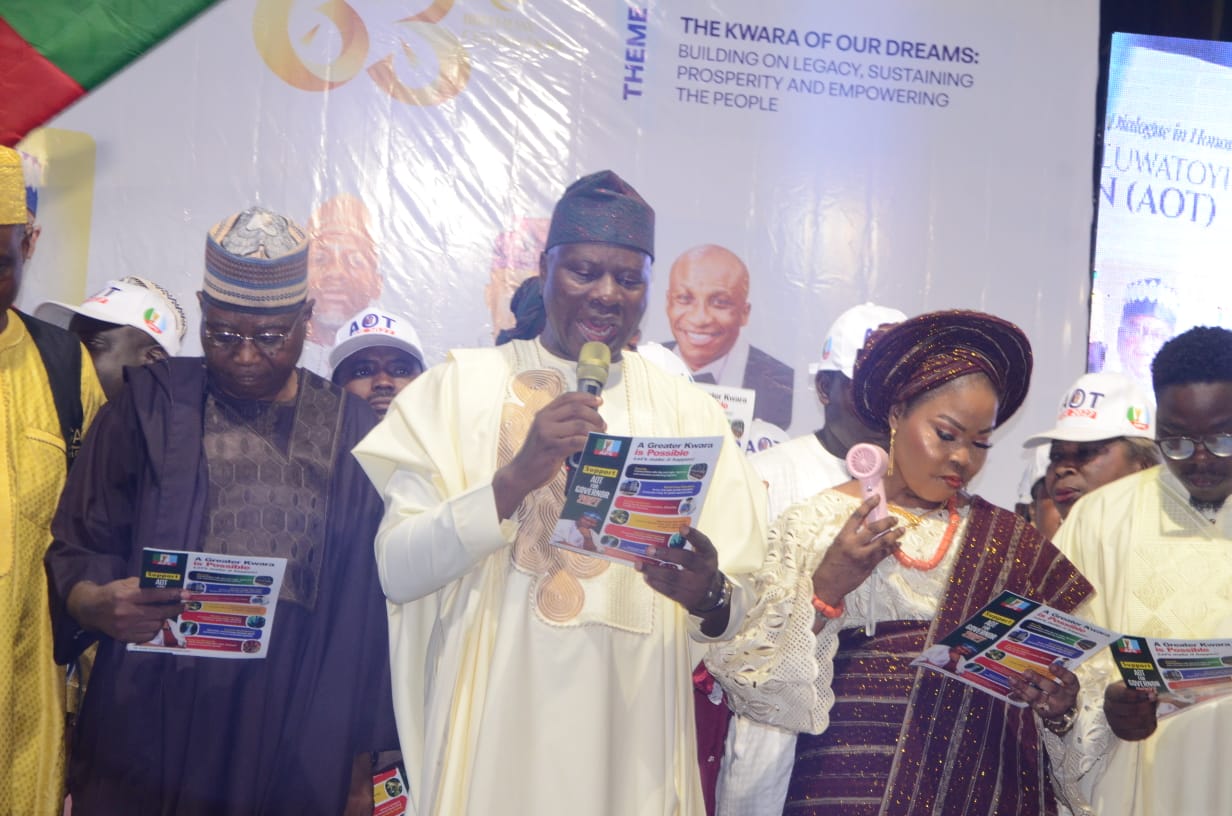
ILORIN — Dr Afees Alabi Oluwatoyin Tajudeen has formally declared his intention to contest the 2027 Kwara State governorship election on the platform of the All Progressives Congress (APC), promising to consolidate on existing achievements and drive inclusive development.
Speaking before party leaders, traditional rulers, clerics, youth groups, women, and other stakeholders, Alabi said the state must move beyond potential and embrace purposeful leadership. He stressed that while Kwara remains rich in resources and human capital, only responsible governance can translate those advantages into prosperity.
Although the declaration coincided with a personal milestone, he said the moment symbolised a deeper call to service and leadership. Consequently, he framed his ambition as a collective responsibility rather than a personal quest for power.
Alabi outlined key priorities for his proposed administration, focusing on modernising agriculture, strengthening education, improving access to healthcare, and enhancing infrastructure. In addition, he identified tourism as a viable economic driver, while urging young people to embrace innovation and enterprisFurthermore, he emphasised the need for proactive security strategies and policies that connect citizens to economic opportunities. According to him, sustainable growth requires deliberate planning, continuity of governance, and inclusive participation across all sectors.
He reaffirmed his commitment to building on the achievements of the current administration led by Governor AbdulRahman AbdulRazaq. At the same time, he warned against policy inconsistency, noting that abandoning existing frameworks could undermine long-term development.
Shortly after the declaration, a policy dialogue organised by the Greater Kwara Foundation brought together policymakers, technocrats, and community leaders to discuss the state’s development trajectory. During the session, Alabi reiterated the importance of institutional continuity, arguing that progress must be sustained through structured economic planning rather than short-term interventions.
Meanwhile, development expert Dr David Olayemi urged the state to adopt lessons from Asian economies, particularly in strategic planning and industrialisation. He noted that sustained investment in human capital would remain critical to long-term growth.
Similarly, the founder of Thomas Adewumi University, Dr Johnson Bamidele Olorunsola Adewumi, called for a development model that prioritises citizens’ wellbeing and intergenerational impact. He maintained that policies must address immediate challenges while laying a foundation for future prosperity.
Panel discussions at the event further explored key sectors, including security, education, healthcare, agriculture, and youth empowerment. Participants advocated intelligence-led policing, improved education standards, stronger primary healthcare systems, and a transition to value-driven agricultural practices.
In conclusion, stakeholders agreed that continuity, accountability, and actionable policies would be essential to positioning Kwara as a model for sustainable development in Nigeria.
