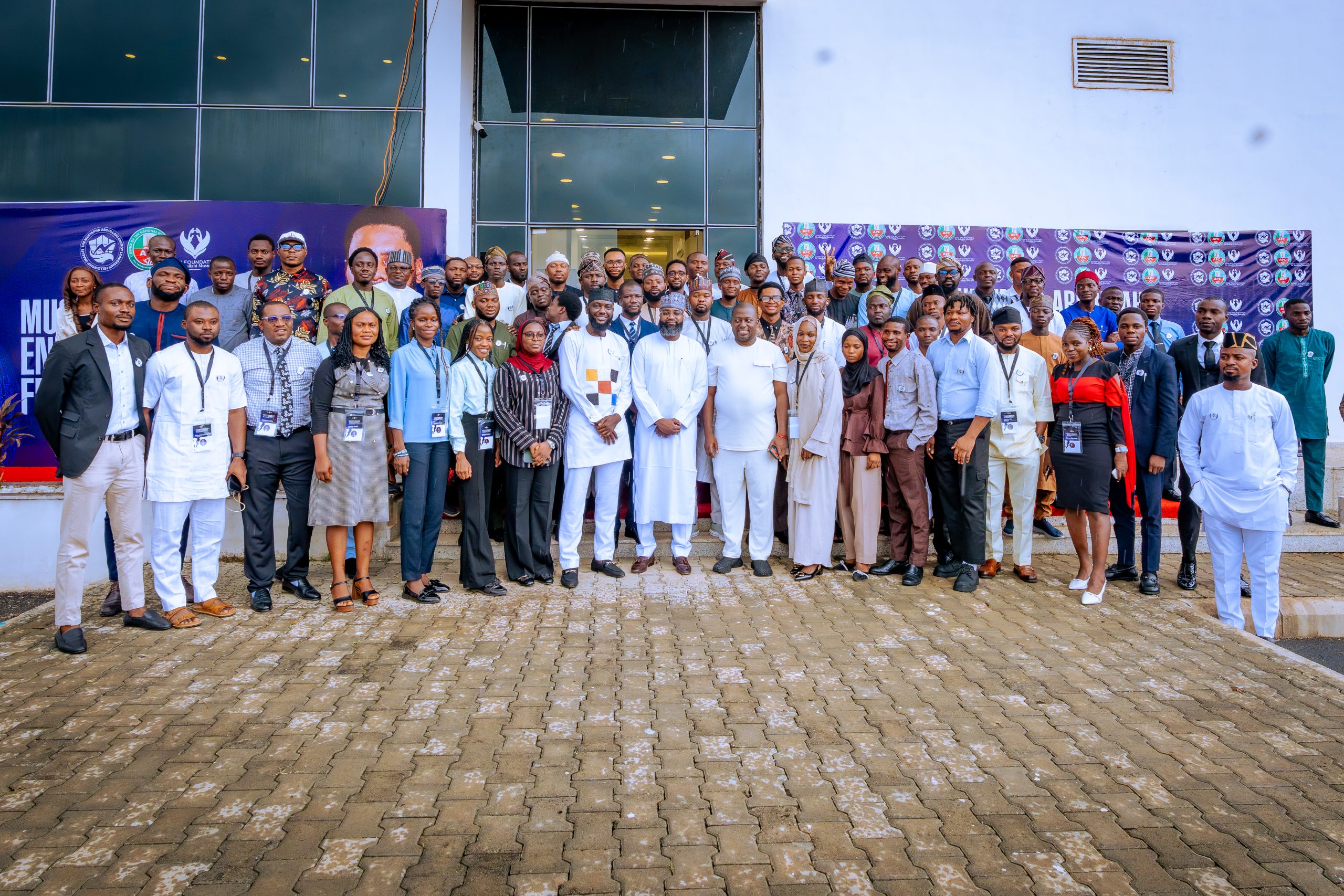
The Executive Vice Chairman of the National Agency for Science and Engineering Infrastructure (NASENI), Khalil Suleiman Halilu, has urged Nigeria to manufacture clean energy technologies instead of relying on imports.
Halilu spoke at the Mustapha Abdullahi Energy Leadership Fellowship in Abuja.
He delivered a lecture titled Energy Infrastructure, Systems and Integration.
He said Nigeria must build a complete clean energy ecosystem.
According to him, that ecosystem should combine innovation, manufacturing, research, financing, policy and skilled manpower.
Leaders Must Drive Energy Growth
Halilu praised the organisers of the fellowship.
He specifically commended the Director General of the Energy Commission of Nigeria, Dr Mustapha Abdullahi, and APC National Youth Leader, Hon. Dayo Israel.
According to him, investing in young energy professionals will strengthen Nigeria’s future.
He added that visionary leadership remains critical to national development.
Africa Faces a Huge Energy Gap
Meanwhile, Halilu said more than 600 million people in Sub Saharan Africa still lack access to clean energy.
He estimated that the continent needs about $15 billion every year to close the energy gap by 2035.
He also noted steady growth in renewable energy investment.
Africa now has more than 20 gigawatts of installed solar capacity.
Moreover, solar photovoltaic projects accounted for 62 per cent of renewable energy investments in 2024.
However, Halilu said implementation must move much faster.
Nigeria Still Depends on Imports
Turning to Nigeria, Halilu expressed concern over the country’s dependence on imported renewable energy technologies.
He said Nigeria spent more than ₦400 billion importing solar technologies in 2025.
Furthermore, imports exceeded ₦200 billion during the first half of 2026.
“These are not just import statistics. They represent factories that were never built, jobs that were never created and opportunities that left our economy.”
He warned that continued dependence on imports weakens industrial growth.
Manufacturing Must Lead Development
Halilu argued that energy infrastructure alone cannot industrialise any nation.
Instead, he called for stronger links between technology, manufacturing, research, financing and policy.
He said those sectors must work together.
According to him, NASENI follows that model through its 3Cs Strategy.
The strategy focuses on Creation, Collaboration and Commercialisation.
First, the agency develops technologies that solve local problems. Next, it partners with local and international organisations.
Finally, it commercialises research to produce market ready solutions.
NASENI Expands Clean Energy Projects
Halilu highlighted several projects supporting Nigeria’s clean energy ambitions.
One project is the 40 hectare Solar Industrial Park in Gora, Nasarawa State.
The facility will produce solar panels, batteries and other renewable energy components locally.
In addition, NASENI has partnered with the Rural Electrification Agency under the Nigeria First Policy.
The partnership promotes locally manufactured renewable energy technologies across electrification projects.
The agency also supports solar powered irrigation systems.
It promotes clean cookstoves to reduce dependence on firewood.
Likewise, it provides decentralised renewable energy solutions for schools, healthcare facilities and rural communities.
According to Halilu, these projects support local manufacturing.
They also create jobs, expand technical skills and improve energy access.
Challenge to Young Nigerians
Halilu urged young Nigerians to become systems thinkers.
He encouraged them to connect technology with policy.
He also challenged them to link innovation with investment.
Most importantly, he urged them to turn ideas into practical solutions.
“Nigeria has the resources, the talent and the market to become Africa’s clean energy manufacturing hub.”
He said stronger institutions and collaboration would determine future success.
NASENI Looks Beyond Energy Access
Halilu said NASENI wants more than wider energy access.
Instead, the agency aims to position Nigeria as a leading producer of clean energy technologies.
He said Africa should increasingly design, manufacture and commercialise those technologies in Nigeria.
Ultimately, he challenged participants to define Nigeria’s place in Africa’s energy future.
“When Africa’s clean energy future is fully realised, will Nigeria simply be a consumer of those technologies, or will we be among those who build them?”
He said NASENI has already made its choice.
The agency, he added, is building the ecosystem that will make Nigeria a leader in clean energy manufacturing and innovation.
