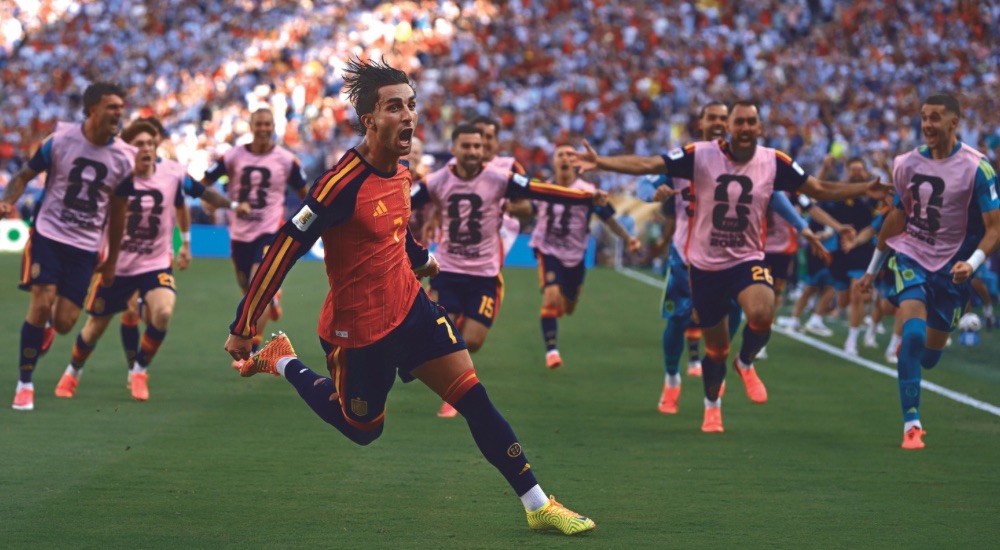
Spain returned to the summit of world football on Sunday after defeating defending champions Argentina 1-0 in extra time to win the 2026 FIFA World Cup at the New York New Jersey Stadium (MetLife Stadium). Ferran Torres scored the decisive goal, ending Argentina’s reign and securing Spain’s second World Cup title.
The victory ended a 16-year wait for football’s biggest prize, with Spain adding the 2026 trophy to the title they won in South Africa in 2010. It also capped an outstanding tournament for Luis de la Fuente’s side, whose consistency and discipline made them one of the competition’s standout teams.
A Final Decided by One Moment
The two sides battled through a tense and closely contested 90 minutes without a goal, forcing the World Cup final into extra time.
With penalties looming, Spain finally found the breakthrough in the 106th minute. Ferran Torres headed home after Nico Williams knocked the ball into his path, sparking wild celebrations among Spanish players and supporters.
Argentina pressed for an equaliser during the closing stages but could not break down Spain’s defence. Their task became even harder after Enzo Fernández was sent off, leaving the defending champions to finish the match with 10 men.
Spain’s Dominance Rewarded
Although the scoreline remained narrow, Spain controlled much of the contest.
La Roja enjoyed 65 per cent possession, attempted 20 shots and restricted Argentina to just one effort on goal, underlining their authority throughout the final.
The triumph also extended Spain’s unbeaten run under head coach Luis de la Fuente to 38 international matches. During the tournament, they conceded only one goal in eight games, highlighting the defensive strength that complemented their attacking style.
Heartbreak for Argentina
Argentina’s defeat brought an end to a determined defence of the title they won in Qatar four years earlier.
Despite their resilience, the South Americans were unable to produce the decisive moment that had carried them through previous knockout matches, allowing Spain to lift football’s most coveted trophy.
A Fitting End to a Historic Tournament
The final concluded the first FIFA World Cup to feature 48 nations, with the United States, Canada and Mexico serving as joint hosts.
After six weeks of football across North America, Spain emerged as deserving champions, completing a campaign that restored them to the top of the global game.
For Spain, the victory represents more than another trophy. It marks the return of one of football’s traditional powers to the pinnacle of the sport. For Argentina, it ends a memorable reign as world champions while setting the stage for the next chapter in international football.
