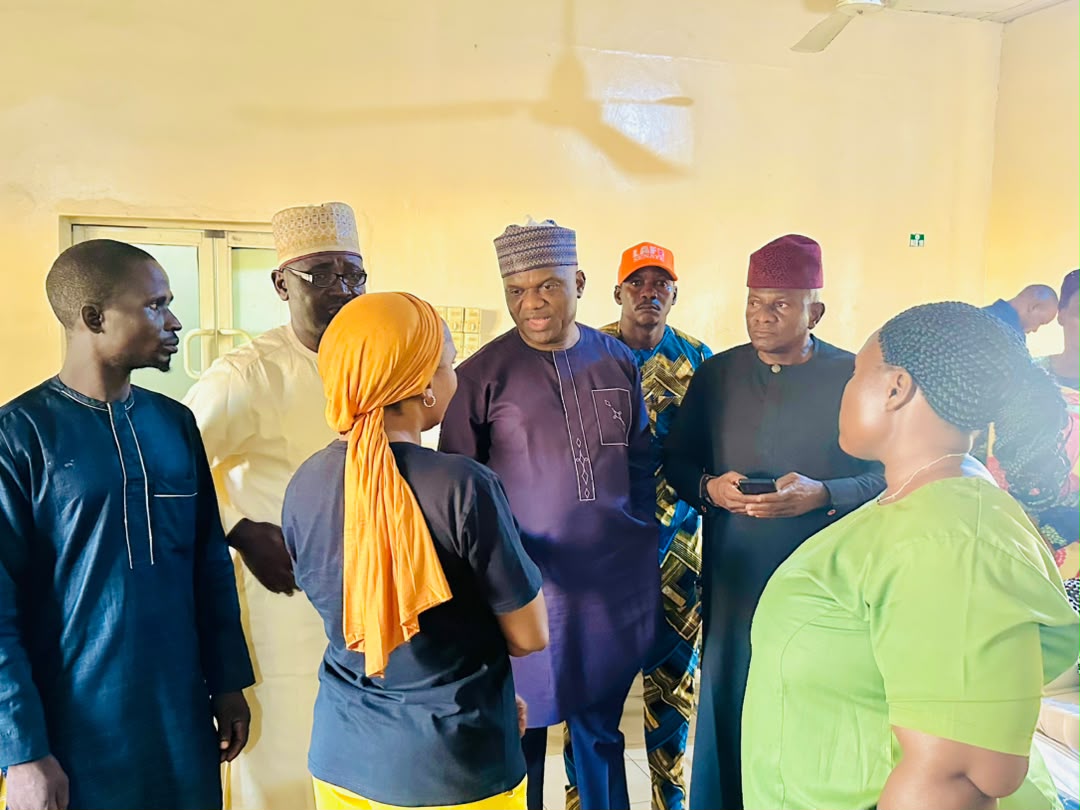
Two indigent patients stranded at the General Hospital, Taiwo Road, Ilorin, have regained their freedom after the All Progressives Congress (APC) senatorial candidate for Kwara South, Prince Olalekan Adewoye, paid their outstanding medical bills totaling ₦3.8 million.
The intervention ended months of financial uncertainty for the beneficiaries, who had remained under medical care because they could not meet the cost of treatment.
During the visit on Tuesday, Adewoye also donated ₦1 million to support the feeding and immediate welfare of other patients admitted to the hospital.
Hope Returns to Hospital Ward
The intervention sparked emotional scenes in the ward as patients, relatives and hospital workers expressed gratitude for the unexpected support.
For the two beneficiaries, the payment meant more than financial relief. It opened the door to recovery outside the hospital after months of uncertainty over unpaid bills.
Hospital staff described the intervention as timely, noting that it brought hope to patients facing financial hardship while encouraging greater support for vulnerable members of society.
‘Leadership Is About Serving Others’
Speaking during the visit, Adewoye prayed for the recovery of all patients receiving treatment at the facility.
He said leadership should be measured by its impact on people’s lives, particularly those facing difficult circumstances.
According to him, helping vulnerable people, especially in critical areas such as healthcare, remains a responsibility that should unite individuals and leaders alike.
Record of Community Support
The hospital visit adds to a series of humanitarian interventions associated with Adewoye across Kwara South.
His outreach has covered healthcare, education, youth empowerment and community development, with a focus on supporting vulnerable groups and expanding access to opportunities.
While the two discharged patients begin a new chapter outside the hospital, the intervention also highlights the growing challenge of medical costs for many low-income families and the role private individuals can play in easing that burden.
