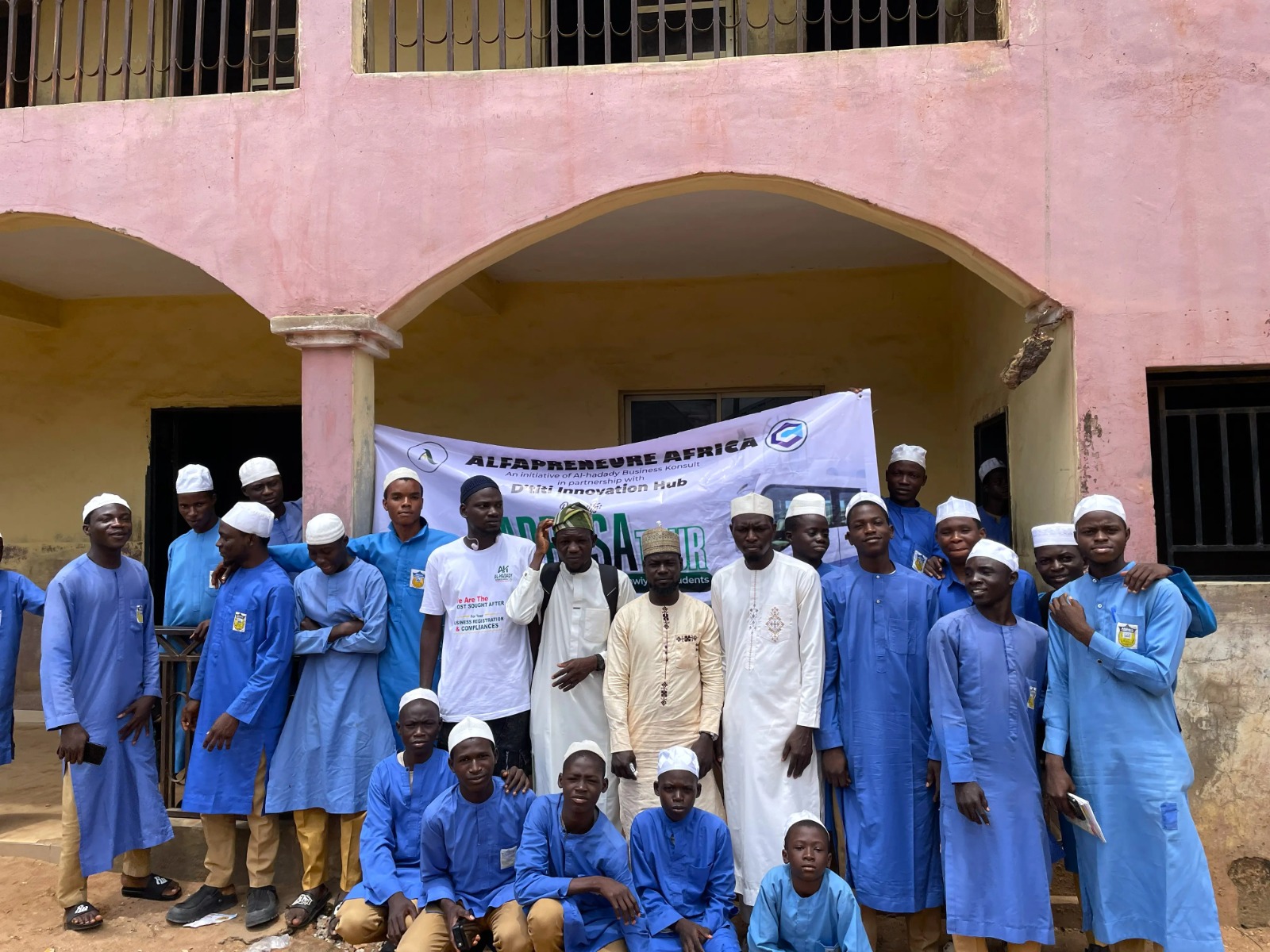
Abdulsomad already knew how to edit videos before attending Alfapreneure Africa’s Madrasat Tour. However, he had not fully understood how to turn that skill into a source of income.
The training changed his perspective.
During the programme, he learnt how digital skills could create economic opportunities. He also gained a clearer understanding of how to monetise a skill he already possessed.
Abdulsomad was among 400 students who participated in the initiative across four Madrasats in Ilorin, Kwara State, between September 20 and 27, 2026.
Alfapreneure Africa, an initiative of Al-hadady Business Konsult LTD, organised the programme in collaboration with D’TITI Innovation Hub.
The organisers said the wider Madrasat Tour ran from September 15 to 30. The four visits documented in the programme accounted for 400 participants.
Through practical sessions on financial literacy, digital opportunities, entrepreneurship and work readiness, the initiative sought to connect classroom learning with skills that could prepare students for economic opportunities.
Four Madrasats, 400 students
The first documented visit took place on September 20 at Zumuratul Suadai Abikan, Isale Aluko. Eighty students participated.
A day later, the team visited Madrasatul Kabaryy, Itakudimoh, where 120 students attended the training.
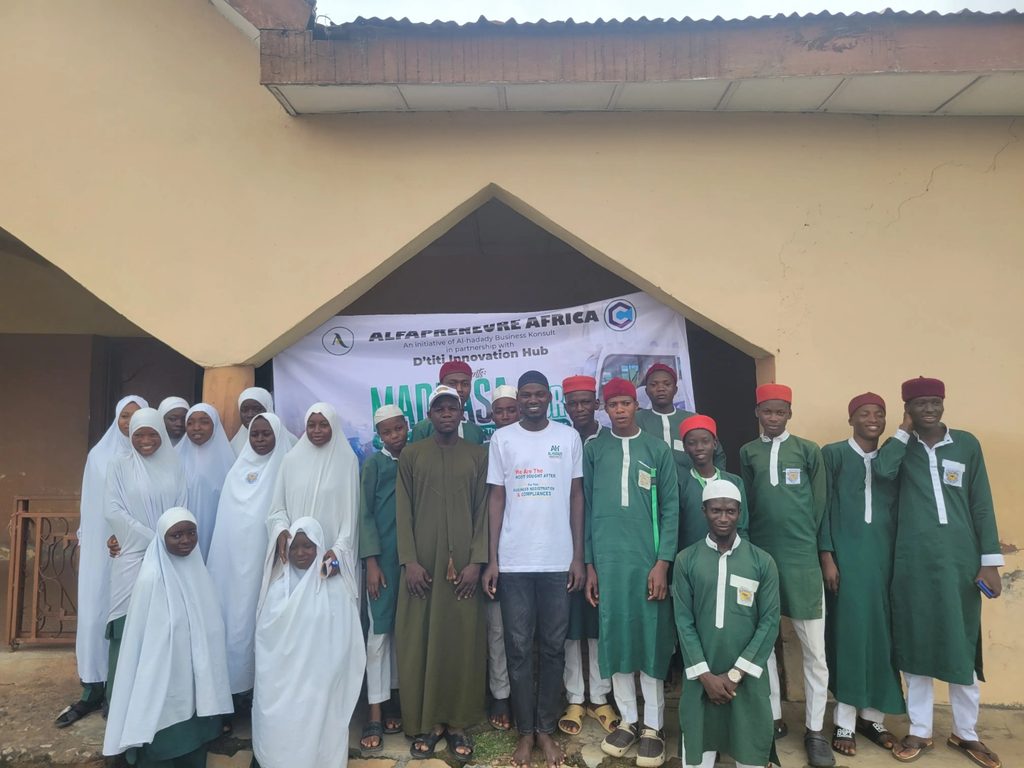
The outreach continued on September 26 at Mahd Darul Salam Oniwiridi, Oke Foma, with 100 participants.
Markaz Ta’leem Arabiyy Wal Islamy, Oke Agodi, hosted the fourth visit on September 27. Another 100 students took part.
Together, the four visits reached the 400 students reported by the organisers.
Understanding how money works
Financial literacy featured prominently in the sessions. Facilitators explained how people earn, spend, save and invest money responsibly.
They also discussed informed financial decisions and the importance of looking beyond immediate spending needs.
Ahmad Rufai, a student at Zumuratul Suadai Abikan, said the training introduced him to lessons about money management and responsible earning.
“I learnt five ways in which money moves and how we can make the best of it,” he said.
Rufai added that the sessions addressed halal and haram earnings. Students also learnt about digital skills that could support personal self-reliance.
His account reflects the programme’s effort to combine financial knowledge with values and practical preparation for future opportunities.
Turning existing skills into income opportunities
For Abdulsomad, the session at Mahd Darul Salam Oniwiridi had a personal connection.
He had learnt video editing before the training. However, the facilitator’s presentation helped him understand how to explore its economic potential.
“The presentation validated my goals and served as a mindset shift for me, as I was exposed to various opportunities,” he said.
He added that the discussion on monetisation gave him a better understanding of how video editing could become economically useful.
Another participant, identified as the school’s head boy, said the programme also exposed students to ways of using digital platforms to develop their skills.
“I learnt how money works and how to leverage our skills through digital opportunities,” he said.
He noted that the sessions introduced different ways to monetise useful skills.
However, the programme has not reported subsequent earnings or employment outcomes from the training. The students’ accounts therefore offer an immediate picture of what they learnt, rather than evidence of long-term economic impact.
Taking digital literacy into Madrasats
Beyond financial literacy, the programme introduced students to opportunities available through social media and other digital platforms.
Facilitator Ibrahim Abdulrasaq encouraged participants to explore these platforms productively and develop skills that could prepare them for future opportunities.
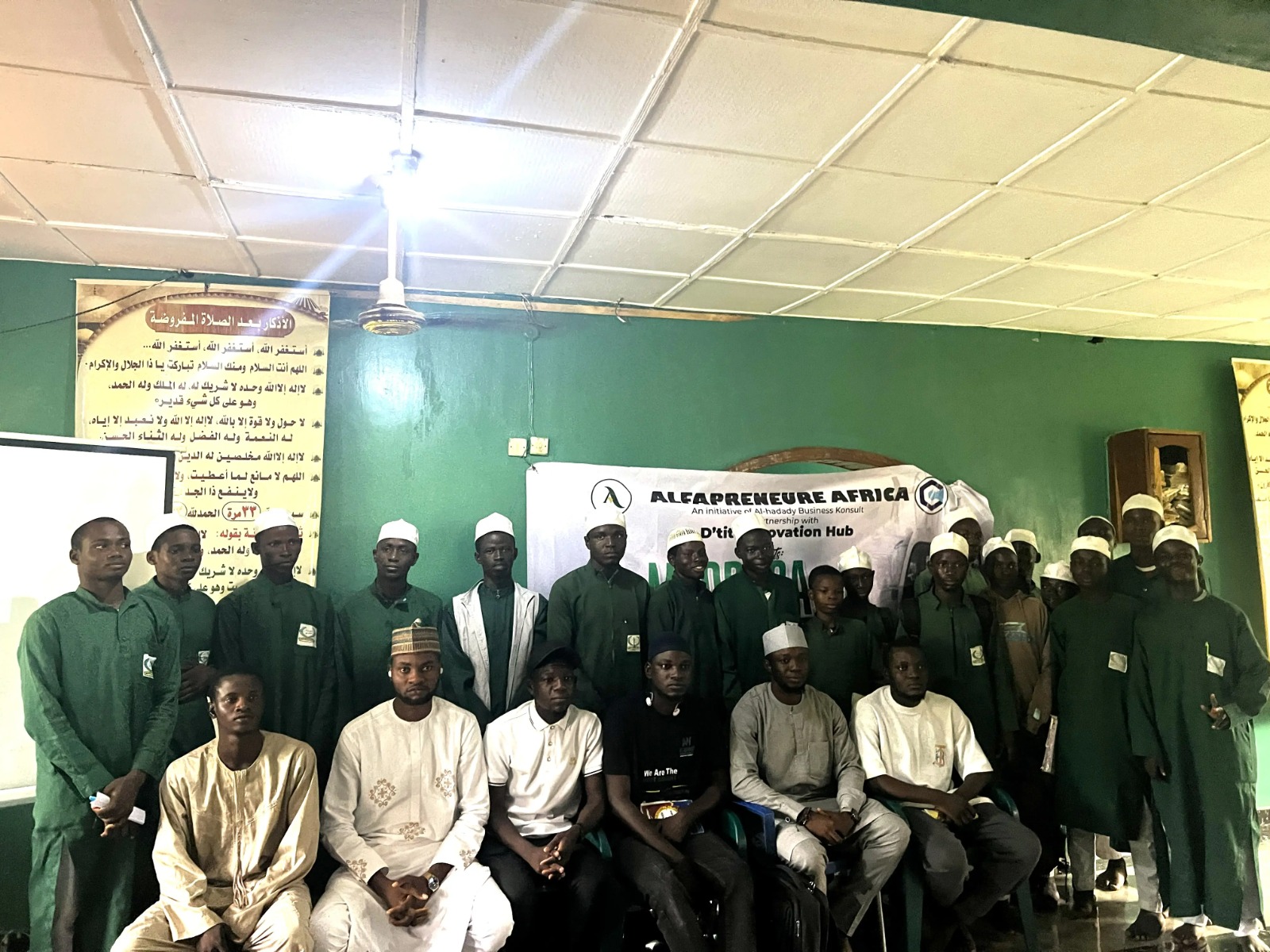
He also urged Madrasat leaders and teachers to strengthen digital literacy within their institutions.
Among his suggestions were developing websites for Madrasats and using Google Classroom to improve communication, learning and access to educational resources.
These proposals offered practical ways for the institutions to explore technology in their learning environments. However, the organisers did not report that the participating schools had adopted them.
Madrasat leader calls for wider outreach
Sheikh Muhammad Fatiu Yahaya Murtadoh, Mudir of Markaz Ta’leem Arabiyy Wal Islamy, described the initiative as relevant to contemporary Madrasat education.
He thanked the organisers and encouraged Alfapreneure Africa to extend the training to more Madrasats.
He also called for additional support programmes that would give students access to further learning and skills development.
His remarks point to the need for sustained engagement beyond one-off training sessions.
Building a financially empowered generation
Suleiman Abdulwahab, founder of Alfapreneure Africa, described the tour as a practical step towards a vision he had developed over several years.
He said the initiative was taking financial and digital skills directly into Madrasat classrooms and communities.
“We are on a mission to shape the future scholar morally and financially,” Abdulwahab said.
He explained that the organisation hopes to address some of the challenges facing Arabic students and graduates by exposing them to practical skills and economic opportunities.
The initiative identifies employment, entrepreneurship and self-employment as possible pathways for students who develop relevant abilities.
However, these remain programme objectives. The September training has not yet produced independently assessed data on its long-term impact.
The organisers said they would continue exploring ways to equip students with skills that could promote productivity, self-reliance and community contribution.
They also expressed interest in extending the outreach to more Madrasats and introducing additional skills-development activities across Arabic and Islamic learning communities.
What happens after the training?
For now, the clearest evidence of the tour lies in its four documented visits, the 400 students who participated and the lessons they described.
The sessions covered money management, digital literacy, entrepreneurship awareness and ways to identify economic opportunities through practical skills.
Whether those lessons will translate into businesses, jobs or additional income remains to be seen.
Yet Abdulsomad’s experience offers an insight into the immediate value of the training.
He already knew how to edit videos. What changed was his understanding of how that knowledge could become economically useful.
That shift in perspective captures the central idea behind the Madrasat Tour: helping students connect what they know with opportunities they may not yet have considered.
