For generations, the pursuit of university education in Nigeria has come with difficult sacrifices. Many people have had to choose between advancing their education and meeting the demands of work, business, family and other responsibilities. For others, the dream of obtaining a university degree has remained out of reach, not because they lack the ability, but because the circumstances of their lives would not permit them to pursue full-time studies.
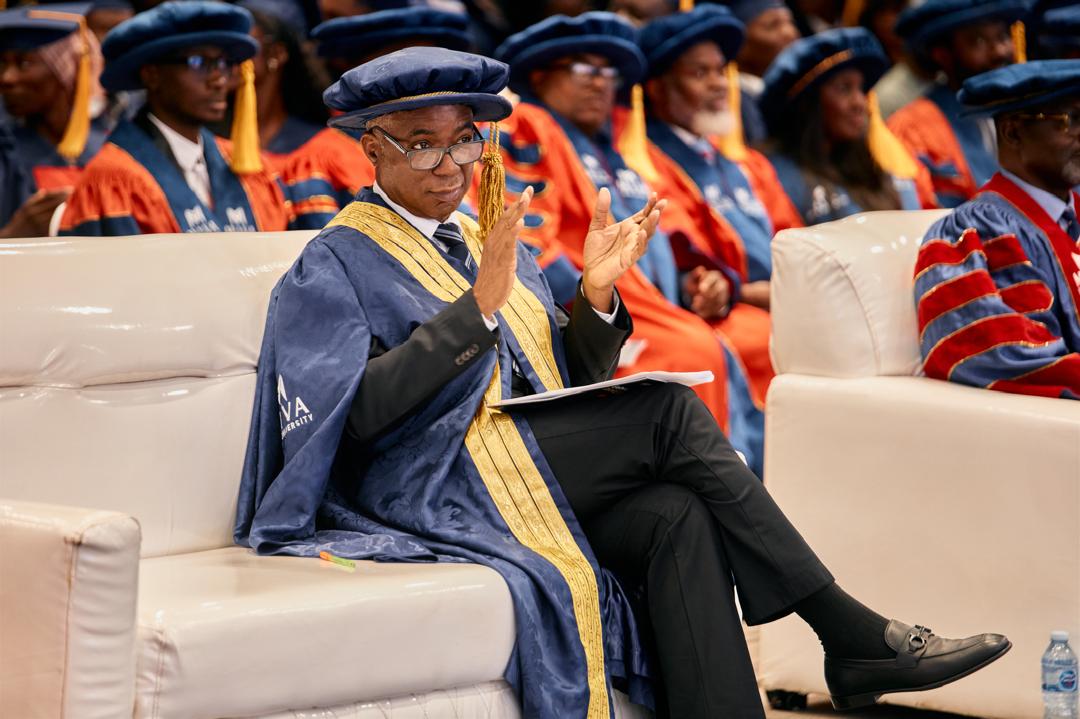
It is against this background that Dr Tunji Olowolafe, Pro-Chancellor of Miva Open University, has called attention to the transformative potential of online learning, describing it as a model that can make higher education more accessible while allowing people to continue building their lives and careers.
Speaking at the university’s 2026 matriculation ceremony held at the Transcorp Centre, Maitama, Abuja, on Saturday, October 17, Olowolafe welcomed the newly admitted students and challenged them to embrace a system of learning that allows personal development and the pursuit of knowledge to progress side by side.
For Olowolafe, the significance of Miva’s model lies in its ability to remove many of the barriers that have historically prevented capable Nigerians from accessing university education. Rather than requiring students to abandon their jobs, relocate from their communities or suspend family responsibilities, the institution provides an opportunity to earn a degree while remaining actively engaged in the demands of everyday life.
He noted that many brilliant Nigerians had been unable to pursue higher education because the traditional system demanded a level of sacrifice they could not afford. By creating a more flexible pathway, Miva is helping to address that challenge and making it possible for more people to invest in their intellectual growth without putting their lives on hold.
Olowolafe’s message was informed by his experience as Pro-Chancellor of the institution. He recalled witnessing the graduation of Miva’s pioneer cohort in Lagos in June and expressed delight at welcoming another set of students in Abuja. He described it as a rare privilege to witness both ends of the academic journey, from the excitement of beginning a degree programme to the fulfilment of completing one.
Beyond expanding access, however, Olowolafe believes that online education reflects the changing realities of the modern world. In his view, the traditional expectation that a single university degree should provide sufficient knowledge for an entire career is becoming increasingly outdated. As industries evolve and new challenges emerge, continuous learning has become an essential part of professional and personal development.
He encouraged the matriculating students to see their admission not simply as an opportunity to obtain a certificate, but as the beginning of a lifelong commitment to learning. By combining work with academic study, he explained, students would develop the discipline and adaptability required to remain relevant in an increasingly competitive world.
“If I were starting my career today, this is the exact path I would choose,” he remarked, referring to the opportunity to build a life and acquire knowledge simultaneously.
He also reminded the students that they were not coming to the university empty-handed. Their experiences in workplaces, businesses and communities, he said, were valuable assets that could enrich classroom discussions and make their learning more practical. The knowledge acquired at Miva should therefore not remain confined to academic exercises, but should translate into solutions to real-life problems.
Olowolafe urged the students to approach their studies with the same professionalism they brought to their jobs, contribute their practical experiences to academic discussions and, most importantly, remain committed to completing their programmes.
With a touch of humour, he warned that their first major examination might come not from their professors, but from their internet service providers. The remark drew attention to one of the practical realities of online learning and served as a reminder that success in a flexible academic environment still requires preparation, discipline and determination.
His most important message, however, centred on the need to ensure that access to quality education is not determined solely by financial circumstances.
Referring to the university’s pioneer graduates, whom he described as living proof of Miva’s mission, Olowolafe reiterated his belief that the opportunity to learn should be available to everyone with the ability and determination to succeed. This conviction informed the partnership between the Tunji Olowolafe Foundation and Miva Open University to establish the Gbemisola Olowolafe Miva Scholarship.
The scholarship is designed to help ensure that financial limitations do not prevent deserving students from pursuing their academic ambitions. For Olowolafe, expanding educational opportunities must go beyond providing flexible learning arrangements. It must also involve creating pathways for capable students who might otherwise be excluded by the cost of obtaining a degree.
He urged scholarship recipients and other matriculating students to honour the opportunity before them by remaining focused and finishing their programmes successfully. Expressing the hope of welcoming them back for their convocation ceremonies, he reminded them that the true value of admission would ultimately be reflected in their commitment to completing the journey they had begun.
Olowolafe also commended the Founder and Chancellor of Miva Open University, Sim Shagaya, the Vice-Chancellor, Professor Tayo Arulogun, the university’s governing council, management and staff for their efforts in building the institution.
His message at the matriculation ceremony underscored a broader point about the future of higher education in Nigeria. As the country continues to seek ways of developing its human capital, flexible learning models offer an opportunity to reach people whose circumstances have historically placed university education beyond their reach.
The challenge is not merely to admit more students, but to create an environment in which they can learn meaningfully, apply their knowledge and complete their studies without having to abandon other important aspects of their lives.
For Dr Tunji Olowolafe, that is the promise of Miva Open University: a system in which education becomes part of life rather than a reason to put life on hold, and in which financial circumstances should not be allowed to stand in the way of academic potential.
As the new students begin their journey, his message is clear. The opportunity has been provided, but the responsibility to make the most of it rests with them. Their success will not only shape their individual futures, but also strengthen the communities and institutions to which they belong.
