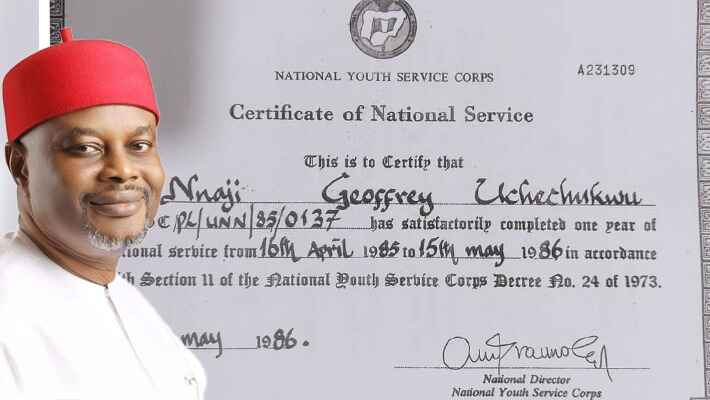
The Federal High Court in Abuja has rejected an application by the Minister of Innovation, Science, and Technology, Uche Nnaji, seeking to restrain the University of Nigeria, Nsukka (UNN), from releasing his academic records.
The ruling, delivered by Justice Hausa Yilwa on September 22, 2025, dismissed the minister’s request for an injunction, marking a significant development in the ongoing controversy surrounding his academic qualifications.
Court’s ruling
In the motion filed ex parte, Nnaji asked the court to prevent UNN from disclosing or tampering with his academic transcript. His legal team argued that the university’s release of the records could potentially prejudice his personal and professional interests.
After reviewing the motion, accompanying affidavits, and supporting documents, Justice Yilwa ruled that while the minister had demonstrated sufficient interest in the matter, his prayer for an injunction was not justified.
“I find that the applicant has sufficient interest in the matter, and the application is partly meritorious. Accordingly, prayers 1, 2, and 3 are granted, while prayer 4, which sought an injunction, is declined,” the judge stated in the Certified True Copy (CTC) of the ruling.
Justice Yilwa clarified that the court’s decision should not be construed as barring the university or any lawful authority from carrying out their statutory responsibilities.
Background
The case stems from allegations that Minister Nnaji submitted forged academic credentials to President Bola Tinubu and the Nigerian Senate during his ministerial screening and confirmation process.
According to the allegations, Nnaji purportedly did not complete his university education and allegedly presented a forged bachelor’s degree and National Youth Service Corps (NYSC) certificate to various government offices, including the Secretary to the Government of the Federation (SGF) and the Department of State Services (DSS).
The controversy over his credentials has attracted widespread public attention, with civil society groups and transparency advocates calling for a thorough investigation into the authenticity of the documents.
Next Steps
Following the court’s decision, the University of Nigeria, Nsukka, is legally permitted to release the requested academic records if required by relevant authorities. The ruling also paves the way for further scrutiny of the allegations against the minister, which could have implications for his position in government.
As of press time, Minister Nnaji or his legal representatives had not issued an official response to the court’s ruling.
The judgment underscores the judiciary’s stance on transparency and due process, particularly in cases involving public officeholders and questions of integrity.
