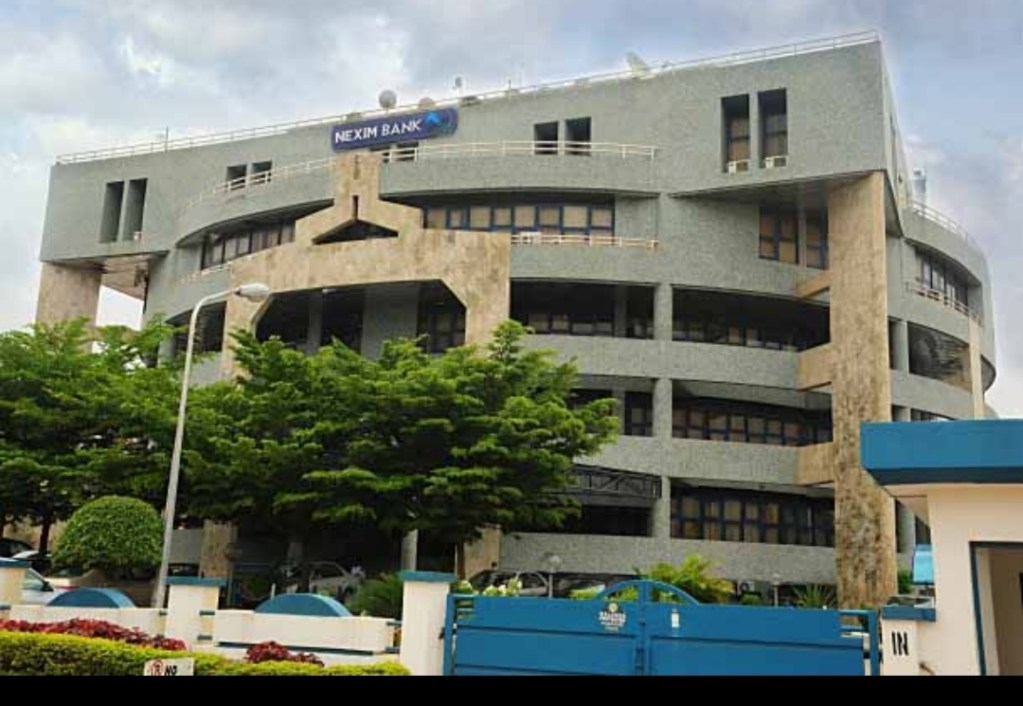
The Nigerian Export-Import Bank (NEXIM) recorded an extraordinary surge in travel expenditure in 2024, spending ₦3.9 billion on staff trips -a rise of over 4,500% from ₦79.6 million the previous year- according to its recently released audited financial statements.
The expenditure marks the single largest increase in the Bank’s administrative costs, outpacing spending on personnel, professional services, and other key operational categories.
Boardless Year, Record Spending
The travel spike is particularly striking given that NEXIM operated for most of 2024 without a governing board. The Presidency had dissolved the previous board in June 2023, and a new one was yet to be reconstituted for much of the following year.
Executive-level oversight was only partially restored in February 2024 when President Bola Ahmed Tinubu appointed Mr. Ibrahim Khalil Gaga as Executive Director, Corporate Services, bringing some leadership stability to the Bank’s management structure.
Strong Financial Results Despite Spending Surge
Despite the steep rise in administrative costs, NEXIM Bank posted one of its strongest financial performances on record.
Profit before tax more than doubled, rising from ₦13.18 billion in 2023 to ₦30.47 billion in 2024 — a 131% year-on-year growth.
The Bank attributed the profit jump to improved earnings from both interest and non-interest income. Interest income rose by 32% to ₦26.1 billion, while other operating income climbed 66% to ₦24.99 billion, driven largely by foreign exchange gains and dividends.
Impairment charges on financial assets dropped by 61%, helping to boost overall margins. Consequently, total comprehensive income for the year reached ₦75.32 billion, up from ₦38.36 billion in 2023 — nearly doubling in a single year.
Operational Expansion and Asset Growth
The 2024 financial year also saw notable expansion in NEXIM’s balance sheet.
Loans and advances grew by ₦36.7 billion, reflecting stronger support for exporters and trade-linked enterprises.
Cash and cash equivalents increased by ₦53.9 billion to ₦163.97 billion, while the Bank’s total assets reportedly crossed the ₦600 billion mark.
Shareholders’ equity improved by nearly ₦50 billion to ₦162.2 billion, bolstered by retained earnings and fair value revaluations.
Travel Costs Overshadow Personnel Expenses
An analysis of the Bank’s operating expenses reveals that the ₦3.9 billion travel bill represented about 39% of total operating costs, which stood at ₦9.48 billion.
Personnel expenses — covering salaries, pensions, and allowances — amounted to ₦4.13 billion, meaning that travel expenses were almost on par with the Bank’s total wage bill.
By comparison, NEXIM spent ₦748.5 million on professional fees and ₦1.8 billion on advertising and marketing within the same period.
Analysts say such disproportionate growth in travel expenditure suggests a significant shift in operational priorities, one that raises questions about cost control and spending efficiency.
No Dividend Declared, But Compliance Maintained
In line with its mandate as a state-owned development finance institution, NEXIM did not declare any dividend for the financial year.
The Bank remains jointly owned by the Federal Ministry of Finance Incorporated (MOFI) and the Central Bank of Nigeria (CBN).
Audit firm KPMG issued an unqualified opinion on NEXIM’s 2024 financials, confirming full compliance with International Financial Reporting Standards (IFRS) and CBN regulatory requirements. The auditors also noted that the Bank incurred no regulatory sanctions during the year.
Summary
While NEXIM’s 2024 financial results demonstrate remarkable profitability and growth, the dramatic escalation in travel spending — amid the absence of a governing board — has drawn attention to governance and oversight issues within the Bank.
As the institution enters a new fiscal cycle, stakeholders are expected to closely watch how management reins in administrative costs while sustaining operational gains.
Source: Nairametrics
