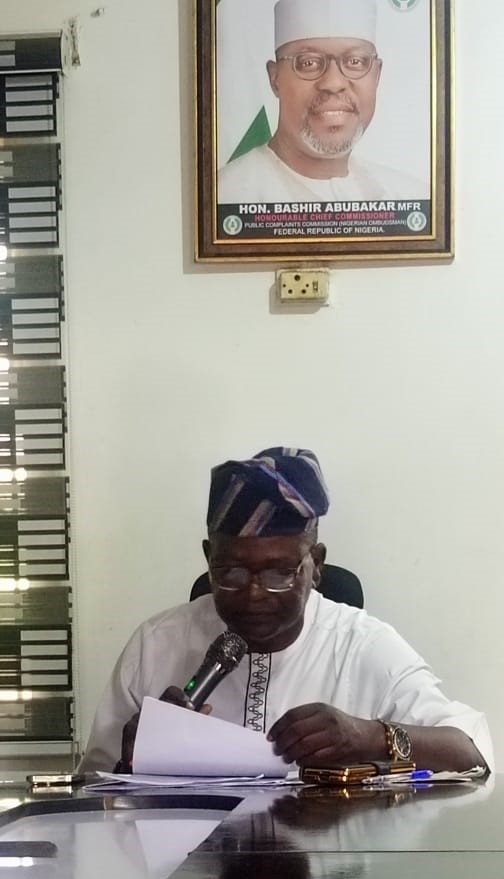
.As Kwara Office celebrates legacy of justice, human dignity
As Nigeria’s Public Complaints Commission (PCC) clocks 50, the Kwara State office has joined in the nationwide celebration, highlighting decades of impactful service, citizen protection, and quiet revolution in administrative justice.
Speaking at a World Press Conference to herald the occasion, the Kwara State Commissioner of the PCC, Barrister Olanrewaju Falola, said the golden jubilee, themed “The Ombudsman in History and Its Significance in Nigeria,” marked half a century since the establishment of the Commission in 1975 by the Murtala Mohammed administration, a visionary step that gave birth to Nigeria’s own Ombudsman institution, dedicated to promoting fairness and protecting citizens from abuse of power.
Barrister Falola who described the milestone as a moment for sober reflection and renewed commitment to justice, said, “For 50 years, the PCC has stood as the voice of the voiceless. Our work is about restoring confidence in governance, resolving injustice, and giving the common man access to redress, freely and fairly.”
He explained that despite limited resources, the Kwara office has recorded several successes that demonstrate the Commission’s quiet but far-reaching influence across the state.
“A total of 2,567 complaints were received from members of the public in Kwara State in 2024, with over 1,500 additional cases recorded so far in 2025. We have resolved hundreds of petitions ranging from wrongful dismissals, unpaid entitlements, and housing disputes. Our mission remains clear: justice must not be priced out of the reach of the ordinary Nigerian,” he stressed.
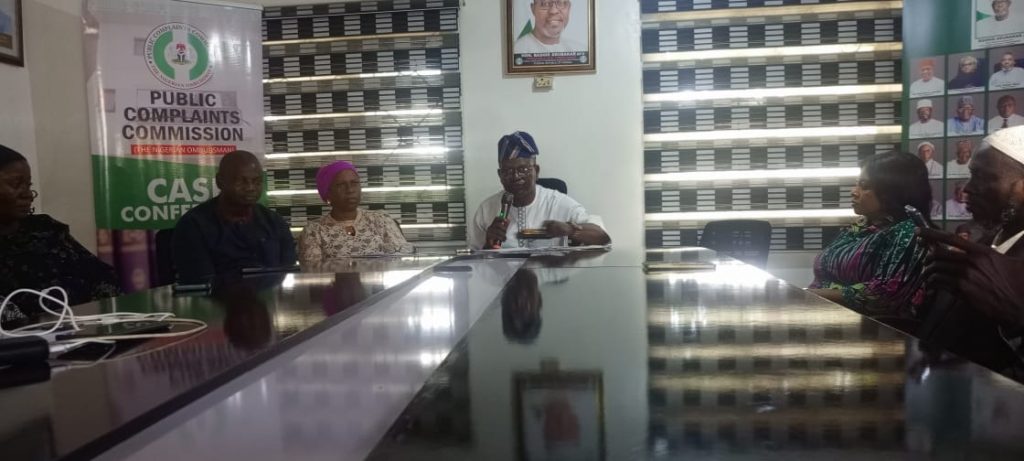
Further highlighting the commission’s impact across communities, Falola said several life-changing interventions have been recorded in Kwara.
He cited the case of a widow and her children who were unjustly evicted but reinstated through the commission’s effort, as well as the recovery of certificates for indigent students who had been denied access to them for years by the National Teachers Institute.
The PCC, he said, also intervened in the rehabilitation of a secondary school, averted a potential religious crisis, and facilitated the payment of gratuities and pensions to retired workers.
Other notable interventions included the refund of N7 million in a breach of contract case, restoration of electricity to a community after years of blackout, and payment of death benefits to bereaved families.
The commission also resolved several labour-related cases, securing entitlements for unfairly dismissed employees and converting dismissal letters to voluntary resignations after thorough investigation.
It further addressed environmental hazards involving a company whose operations had affected residents, compelling the removal of a power station supplying it.
Falola added that the PCC restored peace in an Islamic community where a non-indigene’s hotel had become a source of moral decay and social unrest.
He reaffirmed the commission’s commitment to protecting citizens’ rights and ensuring justice at all levels, saying the PCC’s work over the past two years in Kwara stands as a testament to its enduring relevance and human-centred mission.
He, however, identified inadequate funding and lack of a befitting office space as major constraints affecting the commission’s efficiency in the state.
The commissioner added that the National Assembly is currently amending the Act establishing the PCC to strengthen its powers and ensure better enforcement of resolutions.
