.As Livestock Sector Gets Commercial Push
For years, livestock farming in Kwara State, as in many parts of Nigeria, has largely meant keeping goats, sheep or cattle and selling them when the need for money arises. Milk has often followed a similar pattern, with farmers producing largely for household consumption or familiar local products such as wara.
That pattern is beginning to change.
10,000-Litre Milk Processing Plant
The Kwara State Government says it is putting in place a livestock value chain that will take farmers beyond production for immediate consumption to a system built around processing, organised markets and increased income.
At the centre of the plan is the proposed establishment of a milk processing factory with the capacity to process more than 10,000 litres of milk daily.
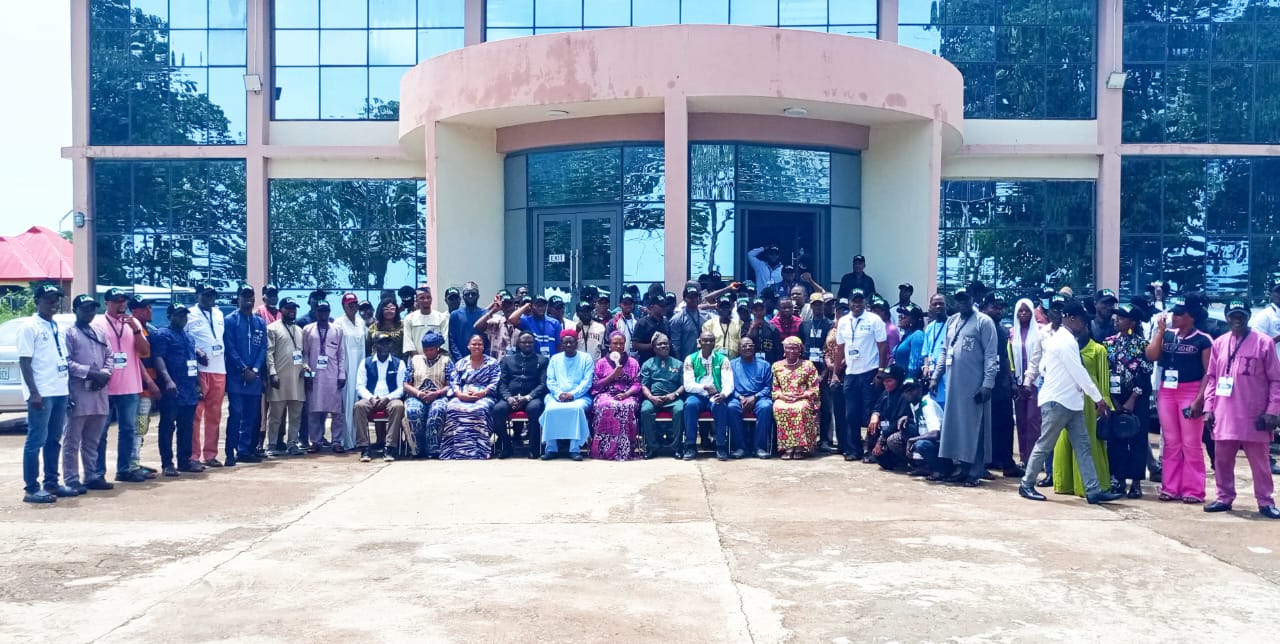
The Commissioner for Livestock Development, Mrs Oloruntoyosi Thomas, disclosed this on Tuesday while declaring open a capacity-building training for 100 livestock farmers under the Livestock Productivity and Resilience Support Project, LPRES.
According to her, the factory is expected to become functional in less than a year, specifically before the end of the present administration, creating a substantial market for dairy farmers in the state.
“Very soon in Kwara State, not in two years, in less than a year, we’re going to have milk factories that will be using over 10,000 litres of milk daily, processing it into yoghurt,” Thomas told the participants.
For Kwara farmers, the significance goes beyond the factory itself. It means that producing more milk could finally make commercial sense because there will be an organised buyer for the product.
The Commissioner explained that farmers would no longer have to depend solely on traditional uses of milk, pointing out that the state’s popular wara would remain part of the local food culture while farmers would have additional opportunities to sell milk for industrial processing.
The development, she explained, is part of the state’s effort to commercialise livestock production through the LPRES and Special Agro-Industrial Processing Zones, SAPZ, programmes.
According to the Commissioner, the idea is straightforward. If there is a market for milk, farmers need to produce more milk. If they are to produce more milk, they need better breeds, feed, water and animal health services. Once production increases, processors have the raw materials they need, while farmers have a larger market for their output.
It is this connection between production and processing that the state government is seeking to establish, Thomas stressed.
Productivity Gains Strengthen Commercialisation Drive
She further disclosed that milk production among farmers who had participated in earlier interventions had increased by about 28 per cent annually while cattle carcass weight had risen by 41.3 per cent and sheep carcass weight increased by 66 per cent, with improvements also recorded in goat production.
According to her, these figures are important because they show that the commercialisation plan is not being built entirely around future promises but rather productivity is already improving among some beneficiaries.
She attributed the gains to three basic interventions: improved breeds, adequate feed and water, and proper animal health management.
The commissioner also disclosed that the state is preparing to take breed improvement further through artificial insemination. She said thousands of cattle would be inseminated as part of the programme, with the aim of improving productivity.
But perhaps the bigger shift taking place in Kwara is the attempt to make farmers think differently about livestock.
Thomas told the 100 participants that the emerging market meant farmers who were already in business could scale up, while unemployed and underemployed people could enter livestock production with the expectation of building businesses rather than simply keeping animals as a form of household security.
“If somebody needs 1,000 goats a day, where is he going to get those goats?” she asked, illustrating the scale of demand that the proposed processing industry could generate.
That question captures the central challenge facing the state’s livestock transformation agenda. Building processing facilities is one thing; producing enough animals and milk to keep them running is another.
The Commissioner said the ultimate objective was to put more money in the pockets of farmers, create jobs and enable residents to become employers of labour.
She also disclosed that the Ministry of Livestock Development would work more closely with LPRES to provide some form of start-up support in goat and sheep production for exceptional participants emerging from the training.
Experts Back Kwara’s Livestock Transformation
In his remarks at the training, Prof. Demo Kalla, Director of the Dairy Research and Development Centre at Abubakar Tafawa Balewa University, Bauchi, and a member of the Presidential Livestock Reforms Implementation Committee, described the training as part of the wider effort to build the skills needed to sustain the livestock transformation agenda of President Bola Tinubu.
According to him, participants had been drawn from across the state to acquire practical skills, including forage conservation, which is critical to ensuring adequate feed for livestock.
He said the training was designed not merely to teach farmers but to improve livelihoods, food security and feed security.
“We cannot have sustainable farming solutions without having the right skills of our youths,” Kalla said. “If we don’t have enough feed for our animals, definitely there will be crisis.”
Kalla, who said he was in Kwara to support the LPRES intervention, described the state’s approach as a model that could provide lessons for other states.
He said the transformation of livestock into a viable commercial sector could create opportunities for young people, women and existing farmers while also contributing to improved security and availability of animal-source food.
He further described livestock as a rapidly growing economic opportunity, saying the sector had become “the latest bride in town” because of its potential to attract farmers, investors and young people.
For Dr Hakeem Ibilade, Director of Ranch and Pastoral Resources Development at the Federal Ministry of Livestock Development, the transformation of the sector must be viewed as a process rather than an overnight achievement.
He said the Federal Ministry of Livestock Development was already making progress, but cautioned that livestock, like other agricultural enterprises, has a gestation period.
Using the example of a pregnant goat, Ibilade explained that results cannot be expected immediately after an intervention.
“If you have maybe a goat, if it gets pregnant today, it will not deliver today. You have to wait at least five months,” he said.
While assuring that the only option left for livestock farming in the country is forward looking, he said:
“We are now on a level where we cannot go back,” he said. “Where we are now, please note, we cannot go back. We are moving forward.”
Ibilade said federal officials were impressed by developments in Kwara, including activities around Ilemona, Ijagbo and other sites, and had therefore chosen to be part of the state’s livestock development efforts.
Building Skills for a Bigger Livestock Market
Also speaking, the State Project Coordinator of LPRES, Mr Olusoji Oyawoye, urged the participants to make practical use of the knowledge and skills acquired during the programme, stressing that the success of the livestock transformation agenda would ultimately depend on what farmers do with the opportunities available to them.
Oyawoye said the Livestock Productivity and Resilience Support Project was designed to increase productivity in selected livestock, strengthen the resilience of farmers and livestock businesses, and drive the commercialisation of the sector.
He said Kwara was participating in interventions covering cattle, including beef and dairy production, as well as sheep and goats, with the aim of helping farmers produce more efficiently and position their businesses for emerging markets.
He added that the transformation of the livestock sector could not be achieved by government alone, but would require the active participation of youths, women, farmers and other stakeholders across the value chain.
According to him, the project’s baseline survey and its partnership with relevant stakeholders had provided a strong foundation for understanding the sector’s needs and measuring the progress of interventions aimed at improving livestock productivity in Kwara.
No doubt, the present administration in the state is moving beyond the traditional picture of livestock farming as the rearing and eventual sale of individual animals.
