From feed scarcity to contested boundaries, Kwara State is turning to stakeholder engagement and community-based conflict prevention to address recurring tensions between farmers and herders.
It is a known fact that recurring clashes between farmers and herders in Nigeria often attract attention when lives are lost, farmlands are destroyed or communities are thrown into crisis. However, the conditions that fuel these conflicts frequently develop long before violence erupts.
In Kwara State, the government is seeking to address some of these underlying issues through improved livestock feed management, clearer boundary rules and stronger cooperation among farmers, pastoralists and security agencies.
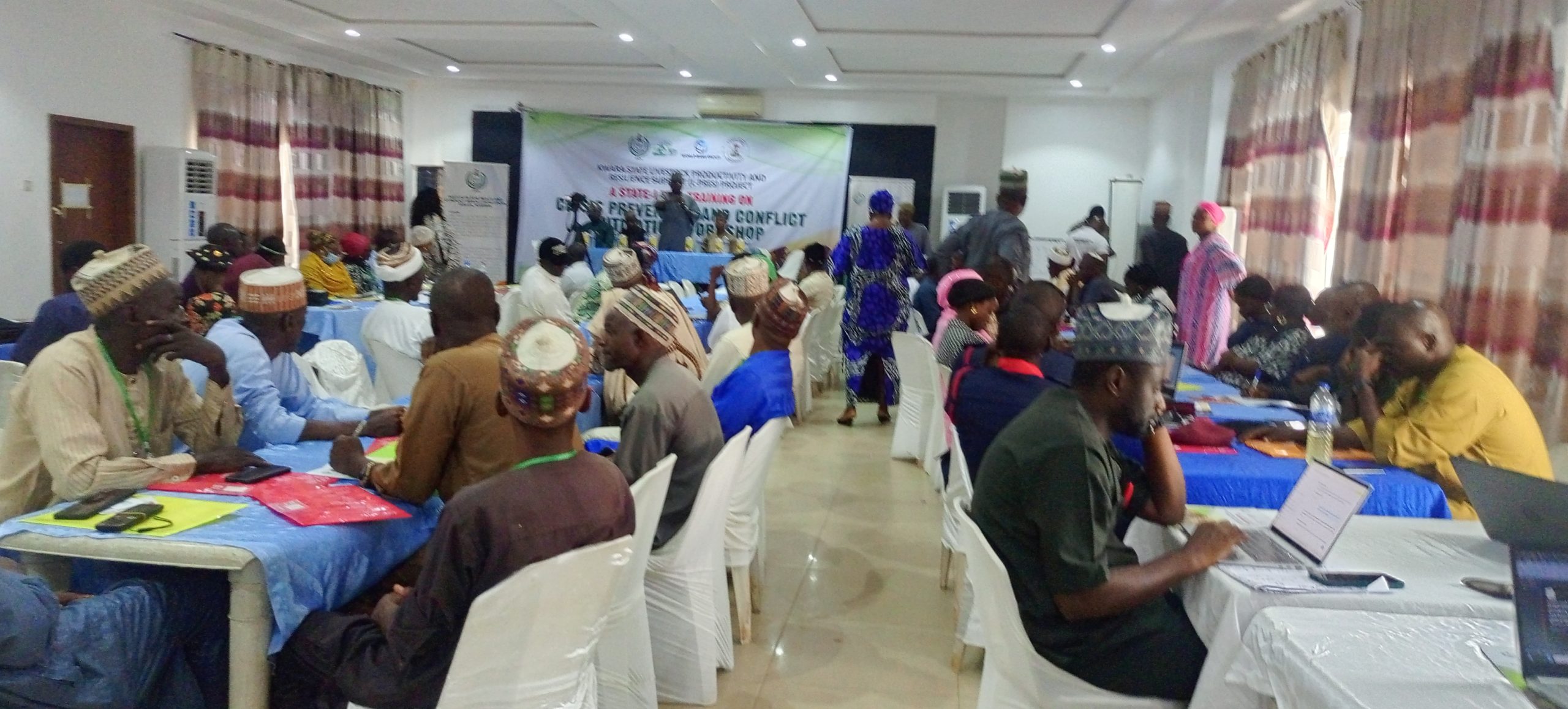
The Herald reports that this approach formed the focus of a four-day State-Level Training on Crisis Prevention and Conflict Mitigation Workshop held in Ilorin, where participants explored practical ways to prevent disputes and strengthen peaceful coexistence between farming and pastoral communities.
At the closing ceremony on Thursday, the State Commissioner for Livestock Development, Mrs Oloruntoyosi Thomas, said the initiative reflected the government’s commitment to sustainable livestock development under Governor AbdulRahman AbdulRazaq.
Represented by the Ministry’s Permanent Secretary, Alhaji Yahaya Mohammed, the Commissioner identified inadequate animal feed as a major factor contributing to tensions between farmers and herders.
This makes feed management an important part of the conflict prevention strategy. When pastoralists struggle to find adequate feed for their livestock, competition over available resources can intensify tensions with farming communities.
Consequently, the government brought together farmers, herders and security personnel to build their capacity and establish practical procedures for preventing disputes.
The training also focused on clarifying boundary rules governing the activities of pastoralists and farmers. This is particularly important in communities where disagreements over access to land and agricultural resources can escalate into wider confrontations.
Need for Sustainable Peacebuilding
While improved feed management and clearer boundary rules address important sources of tension, sustaining peace requires more than occasional interventions.
This was the concern raised by the Deputy Director of the Institute for Peace and Conflict Resolution, Abuja, and Programme Coordinator, Mr Paul Andrew.
He urged the Kwara State Government to establish a dedicated Peace and Security Commission to provide an enduring institutional framework for conflict prevention and peacebuilding.
According to Andrew, such a commission would create a platform for dialogue and cooperation among traditional institutions, religious organisations, women, youth groups, vigilantes and hunters.
He argued that these groups possess valuable local knowledge and experience that could strengthen efforts to prevent conflicts and maintain peace across communities.
According to him, the proposed commission would also provide an opportunity to bring different stakeholders into a coordinated peacebuilding structure rather than relying solely on interventions after conflicts have occurred.
The Herald also reports that the recommendation introduces a broader dimension to the government’s intervention: the need to institutionalise community participation and ensure that conflict prevention remains a continuous process.
Taking the Message to the Communities
There is no doubt that the success of any conflict prevention programme will ultimately depend on whether participants can translate the knowledge acquired into practical action within their communities.
For this reason, the selection of participants was an important aspect of the training.
Andrew explained that the Livestock Productivity and Resilience Support (L-PRES) project in Kwara State carefully selected participants based on their track records and contributions to their respective communities.
The selection was intended to bring together individuals with the influence and experience needed to promote peaceful coexistence beyond the training venue.
Speaking on behalf of the participants, Mr Atiku Issa from Kaiama Local Government Area appreciated the state government and the L-PRES initiative for organising the programme.
Issa, who is the State Secretary of Gan Allah, described the training as impactful and pledged that participants would take the knowledge acquired back to their respective communities.
He said they would share the lessons with others, extending the programme’s potential impact beyond those who attended the workshop.
From Conflict Response to Conflict Prevention
Indeed, Kwara’s approach highlights an important consideration in managing farmer-herder relations: lasting peace requires attention to the conditions that trigger disputes, alongside effective mechanisms for resolving them.
Addressing feed shortages, clarifying boundaries and strengthening communication among stakeholders could help reduce avoidable tensions. However, these interventions must translate into practical arrangements that communities understand and respect.
Similarly, the proposed Peace and Security Commission could provide the institutional continuity needed to sustain dialogue and coordinate local peacebuilding efforts.
The four-day training has therefore created an opportunity to strengthen cooperation among key stakeholders. Its real value, however, will depend on implementation, community engagement and the government’s willingness to sustain the process.
For farmers and pastoralists, peaceful coexistence is not merely a government policy objective. It is essential to protecting livelihoods, sustaining agricultural productivity and securing the communities where both groups live and work.
