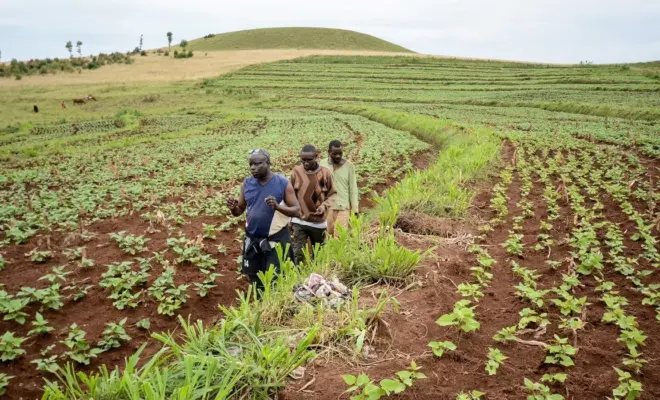
Stakeholders in Nigeria’s organic and agroecology sector have called for stronger policy support to scale up sustainable and chemical-free farming practices across the country.
The call was made on Tuesday in Abuja at the 2025 National Organic and Agroecology Business Summit, organised by the Organic and Agroecology Initiative of Nigeria (ORAIN). The summit brought together policymakers, farmers, researchers, and private sector players to explore opportunities in organic production, processing, and marketing.
Speaking at the event, Alhaji Abubakar Gotomo, Chairman of the ORAIN Board, said the coalition was established to promote eco-friendly agricultural systems and reverse soil degradation caused by excessive chemical use.
“We are promoting organic farming to save our environment. Continuous use of chemical fertilisers and pesticides degrades farmlands. We want both farmers and government to embrace organic practices,” Gotomo said.
He lauded government ministries for their growing support for organic agriculture, noting that several have stopped subsidising chemical fertilisers due to their harmful impact on the environment.
“Government support has been encouraging, especially through policies promoting natural inputs to sustain agricultural production and protect the ecosystem,” he added.
Representing the Federal Ministry of Agriculture and Food Security, Mr. William Ekpe described the summit as both timely and crucial in addressing Nigeria’s twin challenges of food insecurity and environmental degradation.
“These practices support soil health, biodiversity, and climate resilience while producing safe, healthy, and affordable food for our growing population,” Ekpe stated.
He noted that the ministry had prioritised integrating organic and agroecological principles into national agricultural policies and programmes, while strengthening partnerships with academic institutions, development agencies, and farmer groups.
According to Ekpe, “Modern agriculture must emphasise sustainability, inclusiveness, and innovation—not just productivity.” He urged stakeholders to focus on empowering smallholder farmers, women, and youth to expand access to organic and eco-friendly farming methods.
“In the soil beneath their hands, we reaffirm our commitment to safe food systems, healthy soil, and strengthened livelihoods across Nigeria,” he added.
Also speaking, Prof. Olugbenga Adeoluwa, National Coordinator of ORAIN, said the annual summit has become a unifying platform for stakeholders across the organic and agroecology value chain.
“This is the ninth edition since 2016, bringing together ministries and agencies in agriculture, trade, health, environment, education, finance, tourism, and women’s affairs,” Adeoluwa said.
He noted that the 2025 edition focused on expanding market access for organic produce, both locally and internationally, to strengthen agribusiness and reduce dependency on imports.
Adeoluwa recalled that Nigeria launched its National Organic and Agroecology Standards in 2024 to guide production, processing, and certification — a move that has improved consumer confidence and reduced export rejections linked to poor practices.
“With these standards in place, consumers can trust certified organic produce as safe and contaminant-free,” he said, adding that ORAIN is also promoting community-level storage systems and policies that support natural preservation to reduce post-harvest losses.
The summit featured exhibitions showcasing organic products and innovations by local farmers and agripreneurs.
Since its inception, the National Organic and Agroecology Business Summit has rotated among major Nigerian cities, serving as the country’s leading platform for advancing sustainable agriculture and green enterprise.
